About Me

My photo
Author, film researcher and member of the Swedish Military History Commission.
Showing posts with label Finnish Army. Show all posts

Friday, December 09, 2016

The Strangest Winter War Volunteer

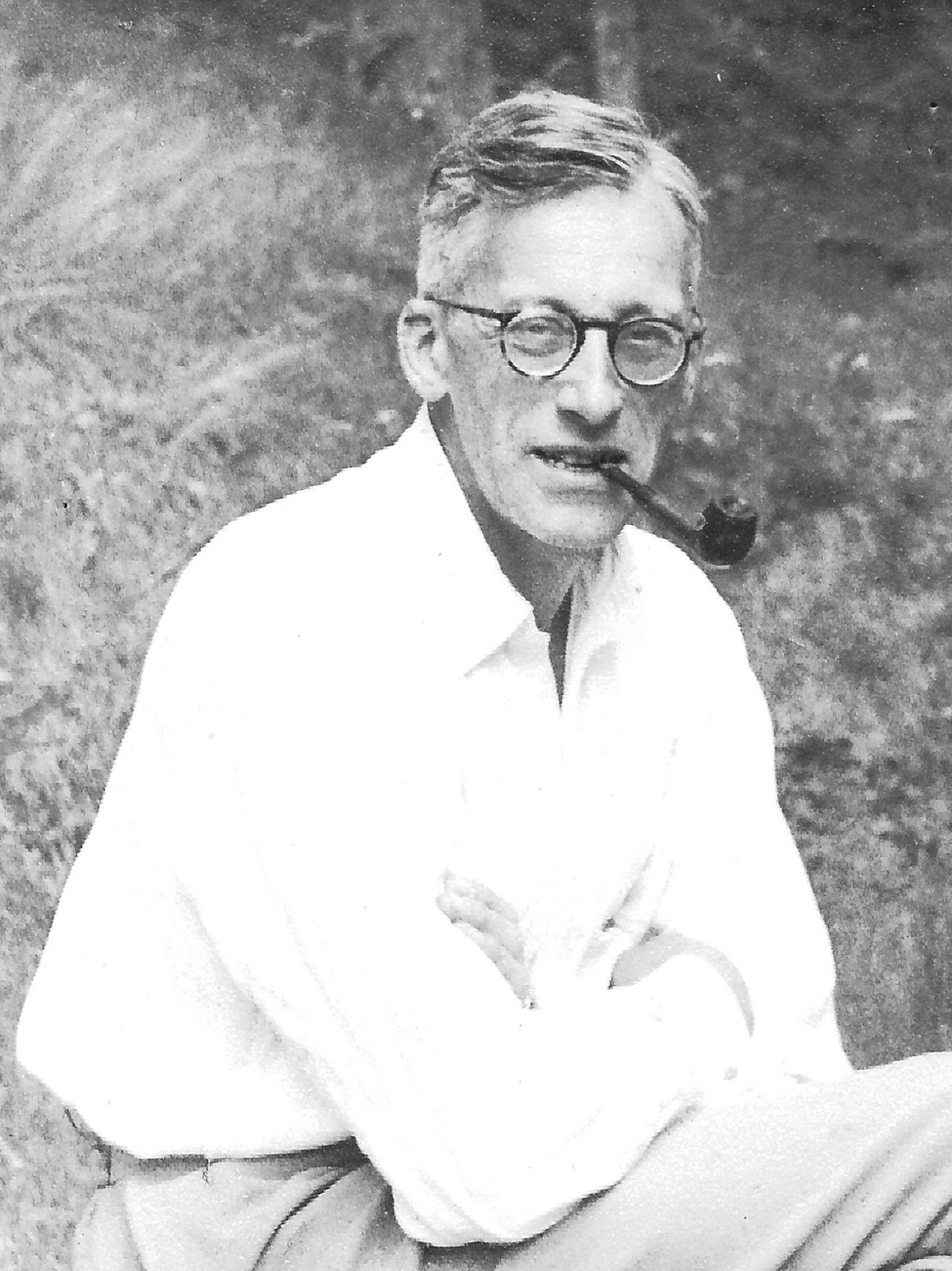
Winter War volunteer Otto von Zwehl. Photo from the book cover.

While researching for Swedes at War 1914-1945 I came across some pretty unexpected foreign volunteers for Finland during the Winter War of 1939-40. But I missed one very remarkable German who defied both Hitler and Stalin, only to later return to German service in spite of being considered partly Jewish. The first book about him is now out.

The Winter War had an attraction similar to the Spanish Civil War, it made people volunteer from near and far. Just two examples: the US President’s son Kermit Roosevelt recruited a “Finnish Legion” in London that went to Finland with 230 legionnaires. The elderly French general Clement-Grandcourt signed up as a private, but was made an officer when he arrived at the volunteer center in Helsinki. Well, now Lars Westerlund of the National Archives of Finland, author of several books about 20th century wars, has documented one of the 15 Germans who chose to fight for Finland in spite of the Molotov-Ribbentrop pact. For the Bavarian Otto von Zwehl this was a step that was not as strange as it may sound, as he was among the German officers who had fought for Finland back in 1918. The year after he became a Freikorps volunteer in his native country, the commander of the artillery detachment of the Freikorps Probstmayer.

What made Otto v. Zwehl´s decision to volunteer for Finland in 1939 very special indeed was that he was then both a civil servant of the Third Reich and, according to the same state, a Mischling, meaning mixed-blood, to be precise a Vierteljude ("one-quarter Jew").

As a resident of Finland since 20 years, Otto v. Zwehl felt it was his duty to volunteer for Finland when Stalin attacked on November 30, 1939. In late December 1939 his application was accepted and he was put in charge of a motorized battery of Finland Swedes. The vehicles of the unit got markings consisting of a "Z", for Zwehl, followed by a number. In Germany, the authorities were not happy - when Hitler heard of von Zwehl´s step he "blew his top". Lars Westerlund writes that Hitler then personally made sure that Otto v. Zwehl lost his German citizenship.

In record time, though, von Zwehl was granted Finnish citizenship and refused to follow the advice to emigrate to the United States.

One year later and in spite of how he has been treated by the German state, Otto v. Zwehl became a Finnish volunteer in the German Army in Finland. As a modern reader one finds this decision particularly hard to understand. Here one misses an interview quote from Otto von Zwehl. However, Lars Westerlund has managed to put together an amazing biography even though von Zwehl died in 1960. The book provides very valuable insights into Third Reich policy toward Finland, as well as the German community in Finland. This book also constitutes one of the first Nordic books about Mischlinge in German uniform during WWII, a subject pioneered by the US historian Bryan Mark Rigg.

Otto v. Zwehl is so far only available in German, as an e-book via Amazon or as a book-on-demand in Finland.

Friday, June 10, 2016

Remains of Panzerkampfwagen 35 S Close To Sweden

Tank commander cupola from a Panzerkampfwagen 35 S, still out in the open.

I had underestimated how much there was left to see of the 1944 battles on the Finnish side of the Tornio Valley, the bilingual region situated where Sweden and Finland share a common land border. Thanks to Finnish author Mika Kulju we got to see not only WWII foxholes - some still quite deep - but also the remains of a German tank turret cupola, still out in the open.

Mika Kulju has written extensively about both the Winter War and Continuation War. It is no wonder he knows his stuff as he actually grew up on a 1944 battlefield. So, we could not have had a better guide to see physical remains of what happened around Tornio when the Finnish Army launched a surprise attack against the German troops there, in October 1944. But how did a tank from France end up in this battle??? Because the above tank commander cupola was once attached to a French tank. It was first known as Somua S 35 and 450 of them were made...

Well, the German Army in 1940 managed to capture almost 300 of these tanks and soon put them to use against new enemies, mostly the Soviets. They made some slight improvements, like cutting down the commander's observation cupola a bit and adding a two-piece hatch to it. They called the result Panzerkampfwagen 35 S. In the big French tank museum in Saumur you can see one of these, albeit painted in pre-German fashion.

The Saumur Tank Museum´s Panzerkampfwagen 35 S with the same type of cupola (on top) as in the previous photo, but plus the two-piece hatch. PHOTO: Antonov14

When the Finnish troops were confronted with this type of tank by Tornio in October 1944 they used not least German anti-tank weapons to blow them apart. In typical Finnish fashion a local citizen then decided to put the cupola to use by making it part of a sauna! Make sauna, not war... The "tank sauna", however, did not last and the cupola was chucked out in the open, where it still is in 2016.

Mika Kulju (left) with the owner of what may be the last remaining part of the German tanks that were destroyed by the Finnish Army by Tornio.

Below are some more photos to give you an idea of our trip, including a sign in Russian and Finnish on the Tornio railway station that was fought over in 1944 but had already been part of world history, when Lenin in 1917 was there on his way from exile in Switzerland to chaos in Russia.


Just what are we doing in the above photo? Well after having walked the battlefields we of course simulated the battle by playing TORNIO ´44, a board game in English produced in 2015 by a talented wargamer, Mikael Grönroos. The game is soon to be marketed in Pennan & Svärdet. Much more can be said about what we saw and learnt thanks to the generous Mika Kulju, but I am saving some special stories from this battle for a coming book of mine in English about WWII in Arctic Europe. Meanwhile, if you can read Swedish or Finnish, make sure to check out Mika Kulju´s books and then find out from TORNIO ´44 if you can "alter" history. If you haven´t seen my previous report about WWI & WWII sights in central Tornio I think you might now want to check it out.

Monday, January 18, 2016

Lapland 1944 Movie "Wildeye"

Teaser for "Wildeye".

I can´t recall having seen a single Finnish movie about the Lapland War of 1944 between Finland and Germany - although one famous war movie was partially made in Finnish Lapland, see my previous post about the 1993 version of "Stalingrad". But last fall such a movie premiered in Finland, entitled "Wildeye" in English.

As it has been filmed in areas where I have hiked several times I am very anxious to see this film. However, due to the lack of "film contact" between Finland and my native Sweden I guess I will have to wait for the DVD to see this one. The only other movie I can recall that deals with the Lapland War of 1944 is the 2002 Russian film "The Cuckoo".

My last post here in 2015 was about how the Lapland War is being described in new ways in Finland, e.g. in the Rovaniemi exhibition "We were friends".

Thursday, January 23, 2014

Stalingrad and Karelia News

The big Soviet war movie of 1975 - now with English subtitles.

Attention all students of the Eastern Front and Finland in WWII: there are some new sources and a new exhibition to check out.

Mosfilm has put several complete Soviet films on Youtube, some with English subtitles. Just click on the above to watch the first half of "They Fought for Their Country" a classic 1975 Soviet war film directed by Sergei Bondarchuk. The film lets you follow a Soviet platoon fighting a rearguard action during the German drive on Stalingrad. For more old Mosfilm movies just check out the official Mosfilm site on Youtube.

My colleague Bair Irincheev, the author of several books that I have reviewed, has recently opened a permanent exhibition in Vyborg (in Finnish Viipuri and in Swedish Viborg) called "Karelian Isthmus 1939-44 Wars". I have not yet been there myself but from visiting Bair´s page about the exhibition I reckon it is a must if you are in the area.

Finally, fellow tank buffs, Bair is now also the author of a book so new I have not yet received it, but it looks promising: "Tanki v Zimney voinye", which translates as "Tanks in the Winter War". Any chance it might be translated, Bair?