About Me

My photo
Author, film researcher and member of the Swedish Military History Commission.
Showing posts with label Norway. Show all posts

Thursday, July 08, 2021

Sepals Base Investigation


The most secret WWII Allied bases on Swedish territory are now being investigated by proper field research. Last week I had the privilege to take part in the investigation of an until now in modern Sweden basically unknown base under the Special Force HQ (insignia above with the standard British wings worn by many SFHQ operators).


The location of this Sepals base under SFHQ (and perhaps also the Norwegian XU) and most of the artifacts that we found can at this time not be shown, as the place and most artifacts are still under investigation by Swedish archaeologists. What I now can reveal is that a number of issues of the newspaper Stockholms-Tidningen found their way to this remote mountain location. Given the rarity of that paper above the Arctic Circle it is probable that these papers came to this place as part of the flow of weapons, ammunition, food etc between Allied embassies in Stockholm and the resistance groups in the Norwegian county of Nordland. It is known from Norwegian WWII literature that the place we searched was an important point in the secret supply chain to German-occupied Norway.  


Among the newspapers we found there were several articles that really bring home how the reader back then learnt of the major events as they unfolded. The headlines with Stalingrad and 10,000 destroyed Soviet tanks, see below, remind of the scale and connect the base to the larger picture. 


I could not help being rather amused by finding the below article entitled “Invasion In Western Europe Excluded”, that explains how the German fortifications there had become so numerous that successfully invading Western Europe was now impossible.


We were also reminded by the civilian history of the place by several finds. Again, most are waiting to be properly identified, but below is one artifact identified as the foundation for making traditional Sami shoes.


Finally, I wish to thank all those involved in this trip for making it happen, and for good company in a most beautiful area of the mountains shared by Sweden and Norway. For those of you not familiar with the Sepals bases, check out the books by Roger Albrigtsen and myself.   

Friday, March 26, 2021

Guarding Hitler

A 22-year-old Swiss student decided to kill Adolf Hitler and got very close to succeeding. The capture of two unusual Waffen-SS soldiers in Normandy resulted in another of the many close calls with death that the Nazi leader had. If you are keen to learn about the close protection around Hitler, his body guards and their vehicles, then this book by Dr. Mark Felton should be of great interest to you.  

Mark Felton has become a familiar name to many WWII buffs thanks to YouTube. By January 2021 his main YouTube channel reached one million subscribers. But with books like Guarding Hitler he has shown that he is much more than a talented YouTuber. In Guarding Hitler he tells the story of the SS forces directly responsible for the personal safety of Hitler and while doing so makes it clear how complicated the SS empire was. The number of similar (competing) branches within the SS is quite baffling and reflects a basic feature of the whole German state under National Socialism. The Sicherheitsdienst (SD), the intelligence agency of the SS and NSDAP (Nazi Party), has become well known, but Guarding Hitler instead acquaints the reader more with the two SS forces responsible for Hitler´s close personal security, the rather confusingly named Reichssicherheitsdienst (RSD) that was not part of the SD, and the Führerbegleitkommando (FBK). To not complicate life too much I here only use the last names that these groups had.


Guarding Hitler is not least about the many attempts to kill Hitler – I found the Swiss student´s to be the most fascinating one. Although this subject has been covered in previous books and documentaries, Felton manages to make also these sections of his book highly readable. He presents own archive finds about the British Special Operations Executive (SOE) assassination plan called Operation Foxley. The plan, focused on sending a sniper team to Obersalzberg, was created due to the capture of two very special Waffen-SS soldiers in Normandy in June 1944 – soldiers that made the SOE realize that the security at Hitler´s Obersalzberg complex was not perfect. The prisoners opened up a window of opportunity for the SOE. In my opinion Guarding Hitler has all the ingredients to form the basis for a really strong documentary about Operation Foxley, that of course could be followed by a WWII “what if” movie.     


Nordic readers may be surprised to learn from Guarding Hitler how RSD body guards protected also the Reichskommissars in Norway and Denmark. The RSD came to protect not only Hitler but many leaders of the Third Reich. 


Aviation buffs will no doubt be most interested in what Felton has written about Hitler´s private air force including the “parachute seat” that was added to the personal Condor aircraft of Hitler. To quote from the relevant chapter: “Air travel was dangerous, particularly during wartime, yet Hitler seemed to prefer the risks rather than using his train for most long-distance journeys.”


Hitler´s train is of course also present, the Führersonderzug and what I found particularly interesting in that part was what happened to it after the war, how it was used by different states and that Hitler´s saloon coach (dining carriage) was taken out of service only in 1990 (!) and is now on display in a Bavarian steam locomotive museum.


Well then, Guarding Hitler should be of interest to both the average WWII buff, WWII researchers and close protection specialists.

Monday, February 22, 2021

Commando


You may have read several books about the Special Air Service, but what about the soldiers that are instantly recognized worldwide by a single word, commando? Leaving aside the Boer origin, it was the British WWII adoption of the term that eventually led to global recognition of the word. A great place to start reading up on the early Commandos is a book from 1953 (!) that is now again available. 


The first reason to pick up this book is its charming personal style, secondly because it provides good details of events like the raids on Guernsey and the Lofoten Islands. The name of the book is simply Commando and it was written by Brigadier John Durnford-Slater DSO and bar, the man credited with establishing the first British Army Commando unit.


I just loved reading how Durnford-Slater went about to find his “troops of the hunter class” to create a “self-contained, thoroughly equipped raiding unit” (quoting Winston Churchill). Here is an excerpt from the author: “I wanted cheerful officers, not groaners. A good physique was important, but size was not. I looked for intelligence and keenness.” You may have read something similar to that before, but then he goes on to describe accommodations and I was surprised to learn how, according to the first “Commando system”, there simply were no barracks. Instead, Durnford-Slater gave every officer and man of No. 3 Commando, established on 5 July 1940, a subsistence allowance and the man was then required to find his own accommodation and food. To directly quote the author about this idea: “It increased a man´s self-reliance and self-respect, developed his initiative and made him available for training at any time of the day or night.”


There was only one punishment, the order “RTU” meaning a man had to Return To his (previous) Unit. But as the selected personnel were all keen volunteers this was a very dreaded punishment. Reading about the characters that passed through the training is in itself a pleasure and then we get to the first operation, Guernsey. As I do not wish to spoil your reading, suffice to say that Guernsey was a lesson how not to do things.


The Lofoten Islands chapter provides what none of the previous books I have read on the subject have been able to do. It very clearly explains the motives for the raid and then paints a lively portrait of it. Of special interest for us Scandinavians is how Martin Linge, founder of the Norwegian Linge (SOE) Company, comes to life thanks to John Durnford-Slater. Also splendid to get confirmation from the author that one of his officers while on Lofoten visited a post office and sent off a telegram addressed to A. Hitler. However, I still have read no report of how it was received at the highest level. I suppose it was never delivered to him


It was just after Lofoten that the American Embassy in London sent forty US Marines to live and train with the Commandos. I had heard of this episode before but not read any details. Good to get some from Durnford-Slater, as well as his memories of Vaagso (the actual name is Vågsøy). I learnt that the Germans even had a tank there, an older type but it could still have wreaked havoc among the Commandos. It was blown up while still in its garage. Perhaps some Norwegian reader of this blog could inform what type it was and exactly what became of it. This incident is pretty unusual plus, being a former tanker, I am extremely interested in tank-related actions here in Scandinavia.  


For me the 1942 Dieppe raid chapter provided another insight into early, and largely unknown, US involvement in European WWII combat. A party from the 1stUS Rangers were made an integral part of No. 3 Commando for the period of the Dieppe operation. Three of these Americans were killed during the raid.


Simply put, this book is both a nice read and an important source for understanding the early Commandos and their fighting methods. It was great idea of Greenhill Books to again print Commando. I only wish the final operations in Germany had been covered a bit more. 

Tuesday, December 29, 2020

German Special Operations Book Of The Year

Prewar missions over the UK and Poland; German airfields behind Soviet lines and a "Tatzelwurm" mission against Stalin himself - there is so much amazing stuff in this book, and not just about the Luftwaffe´s most secret missions. Some spectacular photos are also in the book.

The two Russian authors Dmitry Degtev and Dmitry Zubov shed light on several German top secret missions with the help of both Russian archives and previous books only available in Russian. I reckon very few people in the West have seen most of the info and photos presented in this book. It starts with naming Luftwaffe officers involved in prewar reconnaissance missions over Poland, the Soviet Union and the UK. These missions were done mainly by using Deutsche Lufthansa aircraft and the first mission over the UK seems to have taken place in 1937. There are several exact officer and aircraft details in the text but here, like in other places in the book, one would have liked to have seen original documents and/or archival details - because the information is of such great interest. However, later on in the book some original wartime documents are shown, regarding other missions.

The invasion of Norway was of course preceded by secret Luftwaffe reconnaissance flights but nowhere before have I read about the exact aircraft used, and other details. There is also a Swedish connection as the reconnaissance aircraft mostly then used were Fw 200 Condors and part of the trip to and from Norway was a route over Sweden already frequented by civilian Fw 200s from Deutsche Lufthansa.

Most of the book is of course devoted to the Eastern Front and from these pages I believe almost every reader will learn new things about German spies, their equipment, the aircraft used and several secret German airfields behind the Soviet lines. The latter can be explained by very few radar stations, no Soviet night fighters as such and vast uninhabited areas. The many spy missions launched by the Germans over the Soviets, and much increased in numbers after the first German defeats, caused the Soviets to form two new formations: destroyer (anti-sabotage) battalions and a new type of security police, SMERSH, an abbreviation for "Death to spies". But, as the authors also note, quite often the Soviet security organs arrested people who had nothing to do with the Luftwaffe, Abwehr (German military intelligence) or SD (the SS intelligence service). These three German organs came to work together on the Eastern Front to such a degree that the title of the book might as well have contained the words "German special operations". 

Having an interest in the Arctic I was especially keen to read the sections about German insertions in the Arkhangelsk and Komi regions. Even though I have read some about these missions in Finnish books I found lots of new details in The Luftwaffe´s Secret WWII Missions. There are also some to me new details about German operations in Iraq and Iran, even illustrated with a Luftwaffe aerial photograph of an airfield near Teheran. But even more spectacular are the often illustrated pages of the special ops with the rare and futuristic Ar 232 "Tatzelwurm". It had a distinct advantage for special ops: "When taking off and landing on rough ground, eleven additional pairs of small wheels under the lower fuselage came into play, to which special rubber caterpillar tracks could be fitted if necessary."

The highlight of the book is in my opinion the description of Peter Tavrin´s failed but still most amazing Kremlin mission, that includes both German and Soviet photographs and Soviet documents that highlight the role of a "Tatzelwurm" in this desperate 007-type mission to assassinate Stalin. These pages could quite easily be transformed into a blockbuster or a TV series (isn't there already a Russian movie?).

The book ends with psychological portraits of Hitler and the Abwehr´s Wilhelm Canaris, which might seem a bit odd given the Luftwaffe title. But after having read these portraits I think I see the point of the authors. With men like Hitler and Canaris at the top, no secret mission could have altered the final outcome.

Saturday, November 21, 2020

SAS Jeep Operations in Germany and Norway


It´s not every day that you find a new book about the SAS in Norway and discover one more Nordic in the ranks of the SAS. Well, With the SAS Across the Rhine is mainly about final operations on German soil. Still, it is well worth getting and now for some details.


Unlike some SAS books this one by the late (he died in 2002) Colonel Ian Wellsted OBE, MA, is very personal, it has plenty of details about his love life. This may put off some readers, but should not – because Wellsted´s memoir highlights something probably quite common – how a turbulent emotional conflict at home can follow a soldier to the battlefield and affect his behaviour a lot.    


In January 1945 Ian Wellsted is trained in the French alps for operations in Norway together with a Danish SAS member I had never heard of before. No, I am not talking about Anders Lassen VC. Every Nordic reader into SAS history knows about Lassen. Wellsted writes about Paul Jensen, a former Spanish Civil War volunteer who after the German invasion of his homeland had become active in a Danish resistance organization until he had to flee to the UK, where he joined the SAS. No year for this is given but Wellsted writes about the man on several pages and Danish history buffs should thus be able to track him down. Would love to find out more about Paul Jensen, or perhaps that was not his actual name? Let me know, dear Danish readers.


To get into the right shape for Norway the SAS men are helped by French alpine rangers, chasseurs alpins, and the part about them was for me extra enjoyable as I have had the pleasure of observing them on an exercise. To be precise I was skiing with the 27thAlpine Ranger Battalion. I thus relate to Ian Wellsted´s warm feelings for his cool French hosts. 


After about a month in the alps the SAS skiers were told Norway was no longer a top priority (but Norway will come back on the agenda) and they were instead sent to Germany to there constitute an advance party with armoured jeeps. So, all you SAS jeep fans, here is a book you will definitely want to read. Wellsted´s jeep battle accounts are supported by 16 photos, not always top quality but none of which I have seen before, and some tactical maps. 


In Germany the author confronts not only German snipers but also a most tense situation with one of his own that obviously is suffering from extreme battle fatigue. 


Once Germany has fallen Norway returns on the SAS agenda. Of course, we now all know that this also broke the German will to fight on in Norway. But at the time things were not so evident, and Wellsted paints a vivid picture of what Norway was like just after the general German surrender. One only wishes this part had been a bit longer and that there had been more photos from it. But the one photo that there is, is of particular interest, with many nice jeep details.


With the SAS Across the Rhine (155 pages) ends with a very modern take on what the WWII SAS was all about and lessons to be learnt from them. This part has been written by one of New Zealand´s greatest SAS history buffs, Terence Gardiner, a retired air commodore, and is in itself worth your time. 

Thursday, November 12, 2020

Hitler´s V-weapons

The story of the battle against the German V-1 flying bomb and V-2 rocket is more fascinating than I thought. The official history of this battle, recently compiled by John Grehan, reminds of how the unmanned aerial vehicle made its debut long ago and includes Norwegian and Swedish aspects.    

The very secret war against the V-1 and V-2 actually began in Norway already in November 1939, most unexpectedly. This was several months before the country was invaded and became a battleground. What happened was that the British Embassy in Oslo then received two letters from an anonymous German scientist whose name turned out to be Hans Ferdinand Mayer. The embassy staff passed on his letters to the Secret Intelligence Service (SIS/MI6) HQ in London for further analysis. The letters turned out to be a leak from the heart of German high tech weapons research, or as the official history puts it: "the first serious evidence to fall into British hands that the Germans were developing rockets for military purposes". 

It is almost beyond belief how much the Germans poured into the V-1 and V-2 projects and this new book brings home both the scale of the German efforts and how the British analysts and leaders learnt of them and tried to prepare themselves for what was to come, and then acted. What the rocket threat more exactly consisted of became a lot clearer thanks to a V-2 that accidentally flew to Sweden on the 13th of June 1944. It was an incredible moment to stand by this rocket´s crater - it is still well preserved in a dark forest not too far from Kalmar in south Sweden. In fact, this crater is one of the highlights in my latest book.  

Having recently researched the V-2 that ended in Sweden I can say that I know of no previous book that mentions the following aspect of what happened once the Swedish authorities had become aware of the cause of the explosion. Basically all relevant previous books report that debris from the exploded V-2 was collected and brought to Swedish technical experts and then the debris was sent on to the Allies, to British experts in Farnborough. However, Hitler´s V-weapons also states that two British technical intelligence officers were allowed to enter Sweden soon after the explosion, and here immediately made some important discoveries. In other words the first Allied examination  of a V-2 took place not in Farnborough but in Sweden.

There is also an exciting "what if" scenario in Hitler´s V-weapons - the Special Operations Executive (SOE) selected a German technician for capture, a key person for the V-weapons. But the man turned out to be so closely guarded that the SOE deemed it impossible to get him alive. 

Well, this 328 page book with 16 photographs (some quite moving) should please both V-weapon and UAV buffs, as well as civil defense and London historians.

Tuesday, November 10, 2020

The Battle for Norway 1940-1942


If you are researching or wargaming Norway 1940 and/or Operation Claymore 1941, this book will be of great interest to you. Because in The Battle for Norway 1940-1942 you will find the original words of the commanding British officers. Written not with hindsight, but as they saw things at the time.

This 174 page book is mainly a collection of wartime despatches and is very ably introduced by the men who have compiled them, John Grehan and Martin Mace. They correctly point out the crucial factor for the Norwegian campaign of 1940, air superiority. As the Allies never achieved air superiority over Norway their attempts at contesting the German invasion forces were doomed. 

From a Swedish perspective it is of special interest to see how clearly the value of the Swedish port of Luleå is stated. "To interfere with ore supplies to Germany from Luleå" is the second priority of the British forces. After that came preserving "a part of Norway as a seat of Government for the Norwegian King and Government". I incorrectly supposed that Luleå came after that.  

On the other hand, the despatches and reports from Operation Claymore, the March 1941 raid on the Norwegian Lofoten Islands, are full of successful action. It was time for Hitler to taste some of his own medicine - the element of surprise. To attain this the Royal Navy first had to reach an exactness of timing, and so it did. The list of shipping and factories (fish oil plants) destroyed is impressive.

From a Norwegian perspective it is pleasant to read how highly the Norwegian detachment commanded by Captain Martin Linge was praised. In the relevant passage it becomes clear why Martin Linge became the founder of the most celebrated Norwegian WWII unit, the Linge Company of the Special Operations Executive.   

For researchers the index of persons is great. There are not that many illustrations (16) but the book still gets a high score as it constitutes a source of great historical value.

Thursday, October 08, 2020

From Averting Another Armageddon To Losing Norway


You probably have read a number of books about Winston Churchill, and seen several films about him. There is now even a decent Churchill biography in comic book format - that I have previously reviewed. But Churchill was not ”the man who averted another Armageddon”. Those words were about the man most associated with appeasement policy, Neville Chamberlain.


Military and natural historian Nicholas Milton has written a very readable biography about “the architect of appeasement”, Neville Chamberlain´s Legacy, and not far into the book I started thinking of it as a good foundation for a TV series. Like no other book, Milton´s book (his first!) captures the incredible and genuine popularity that Chamberlain experienced following the signing of the Munich peace agreement on 30 September 1938. The prime minister who sincerely believed he had thus secured “peace for our time” soon thereafter received 20,000 letters and telegrams from a grateful public. To say that he was greeted like a rock star just after Munich is something of an understatement. More precise would be to say that he was treated like the Beatles. Even the royal family showed him unprecedented respect, also in public.


Nicholas Milton has found such a wonderful illustration that says a lot about the immense enthusiasm for Chamberlain and his policy – a photo of a Chamberlain doll that was actually produced, to cash in on the general mood in 1938. The name of the product was “Chamberlain the Peacemaker”. I believed that such dolls, mainly of Hollywood/TV stars, only appeared in the 1950s. I was wrong.


But Milton also lets the reader sense the completely different mood in the state that was sacrificed at Munich. The prime minister of Czechoslovakia even called his new task “a duty which is worse than dying”.


The British media was during these days almost totally focused on the peace that a large chunk of the world thought had been secured by Chamberlain. Especially in the UK Chamberlain was the man who had averted another huge war in Europe. Here is what Nicholas Milton writes about one of the few British newspapers that contained a different take, the Manchester Guardian: “Their diplomatic correspondent presciently reported, `[Hitler] will be master of Czechoslovakia´s main defences, and there is nothing to stop him from making himself master of all Czechoslovakia in the course of time´.” 


How did Chamberlain then handle the outbreak of war in Europe, less than a year after Munich? This is where the book gets most interesting for us readers in Norway and Sweden. Nicholas Milton shows how Chamberlain viewed the Norway campaign, how especially impressive the German air component seemed to be. Here, as a reader in Scandinavia, one would have wished for some more pages. Still, this is an important source to better understand how the “strategic withdrawal” from Norway for most members of parliament was more of a “humiliating defeat”, and how this perception very much put an end to Chamberlain´s career.  


Two major surprises in the book that I also feel I should mention are Chamberlain´s fanatical birdwatching, and how – as one of his last acts as a statesman – he was crucial for the creation of the Special Operations Executive (SOE). An international movement for German-occupied countries that was a total contrast to regular armies, and to the image of Neville Chamberlain. There really is a lot more to him than his, at the time, extremely popular policy of appeasement. Historical TV drama producers ought to contact Nicholas Milton as soon as possible.

Tuesday, October 06, 2020

Essential Study of Foreign Volunteers in the Waffen-SS & Wehrmacht


There are lots of books about foreign volunteers in the Waffen-SS and not as many about the foreigners in the Wehrmacht. What makes A European Anabasis unusual is that it looks at both categories, and contains a lot of credible military analysis.


Last year a paperback version of A European Anabasis: Western European Volunteers in the German Army and SS, 1940-45 by Kenneth W. Estes was published by Helion & Company and it is this version of the book that I shall now review. Unlike many books about foreign volunteers in German formations I would say it treats Wehrmacht and Waffen-SS volunteers with equal attention and the author´s background as a marine, tanker (lieutenant colonel) and professor of history has made possible a convincing evaluation of how the different volunteer groups actually performed. The volunteers from Spain, the Netherlands, Belgium, France, Denmark and Norway (I have placed them in the order of contingent size) are the main focus, and this is a good choice by Estes, in my opinion. Sure, there were also groups from several other Western European states, like Switzerland and Sweden, but as these groups never reached anything even close to the number of Spaniards and Dutchmen etc their significance for the battles of WWII was, basically, microscopic. 


Well then, two-thirds of the West European volunteers in German formations came from Spain and the Netherlands. Kenneth W. Estes does, however, on occasion mention both Swiss and Swedish volunteers and in one case highlights a Swiss national, Dr. Franz Riedweg, as he was a key figure in the Waffen-SS recruitment program aimed at Germanic populations.  


The author in no way hides the fact that Volksdeutsche from Eastern and Southern Europe played the major role in alleviating the mostly unsuccessful recruiting in Western Europe, especially in Scandinavia. Here the author could have inserted a quote from my co-author Lennart Westberg about how dissatisfied Hitler was with the low Swedish turnout, barely 200 men.  


In the Netherlands the recruiting drive had a rather different level of support. Even the former Dutch Army Chief of Staff, General Hendrik Seyffardt, lent his prestige for a Dutch national “legion” under German SS command. However, it should be noted (as Estes does) that Anton Mussert, leader of the Dutch collaborationist NSB, was too optimistic about Dutch willingness to volunteer for German frontline formations.


Speaking of the frontline, the Wehrmacht´s Spanish Division experienced over three thousand (!) casualties in the fighting at Krasny Bor and the Izhora alone. 


Although Estes has concentrated on understanding the fate of contingents and units, he also presents fascinating details about individual volunteers - men that mostly went down with the Third Reich but in some cases also became rather successful, like the first commander of the Spanish Division, General Augustin Munoz Grandes. In fact, Munoz Grandes became the second-ranking man in the postwar Franco regime. 


Of the book´s 50 photos and paintings most are interesting and often depict Spaniards and Belgians (Walloons). In addition there are 15 useful maps. 


A European Anabasis remains an essential study to better understand the complicated German use of foreign volunteers from Western Europe, and their actual military/political value.

Monday, September 28, 2020

SOE´s Mastermind

A great read about one of the most influential special operations officers of all time.

His codename was actually “M” as Operations and Training Director of the Special Operations Executive (SOE). He was one of the leading British officers on the ground in Arctic Norway 1940. Long before that he had served in Arctic Russia.


Thus I kick myself for not sooner having read this terrific book about Sir Colin Gubbins. SOE´s Mastermind was first published in 2016 and reviews ought not to appear so long afterwards. But, better late than never. Lawyer and SOE expert Brian Lett starts his book perfectly with the escape from Germany in 1914 that was one of the most fundamental learning experiences of young Colin. Then follow years of extreme hardship as a gunner in the First World War and immediately afterwards, in 1919, on the Russian Archangel front. There he had to adapt not only to the Arctic but also to Soviet fighting methods.


On Ireland and in India Colin Gubbins, initially a very conventional warrior, had to learn even more about irregular fighting methods. The Irish Republican Volunteers became his best “teachers” in how to undermine a conventional army, the British Army. The Army realized that Gubbins had learnt a thing or two about irregular warfare and thus he came to write three handbooks for a planned British resistance movement, the first being The Art of Guerilla Warfare, then A Partisan Leader´s Handbook and finally How to Use High Explosives


But Lieutenant Colonel Gubbins was not to become an armchair general - due to various mishaps he had to assume the role of Temporary Brigadier not far from the Arctic Circle in Norway. In spite of very little relevant training and unfavourable geographical conditions he managed to put up a rather good fight against the Germans, until ordered to evacuate his brigade. In spite of being under attack he managed quite well, earning the Distinguished Service Order (DSO). Many of the men he had led in Norway were recruited into the newly formed Commandos. Gubbins himself was needed elsewhere, to form the British guerrilla army called “Auxiliary Units” or “Auxies” that were never employed but would no doubt have made life difficult for the Germans in an occupied United Kingdom.


Well, then follow the years as SOE´s mastermind, from 1943 also formal overall boss at SOE. Author Brian Lett refrained from writing another history of SOE, instead he mainly focused on what leading an organization for sabotage in several countries entailed. This being a Nordic-focused blog I will here only mention some Scandinavian aspects. It turns out that SOE from Stockholm launched a number of non-violent sabotage operations directly against the Germans in Norway. For example, capsules with utterly evil smelling fluid were smuggled into Norway and there were smeared on German greatcoats. The terrible smell made the garments impossible to wear and, like broken German windows, caused serious discomfort during the winter. 


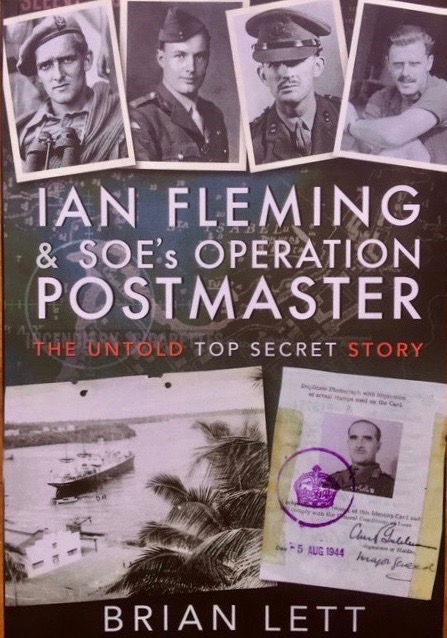
In my blog post "A Deniable Operation Under the Swedish Flag" I wrote about Brian Lett´s wonderful book Ian Fleming & SOE´s Operation Postmaster. Well, in SOE´s Mastermind one learns of what became of the “Swedes”, among them not least the Danish volunteer Anders Lassen, who later was awarded a Victoria Cross.


Operation Gunnerside, the operation against the German atomic project in Norway, has been covered in many books. Still, the Gunnerside chapter in SOE´s Mastermind does not fail to keep me interested and it makes perfectly clear that Gunnerside became an immediate milestone. To quote Lett: “After Operation Gunnerside Colin found it much easier to obtain cooperation of the regular services for SOE´s operations.”


Finally, there is a very personal link between Colin Gubbins and the Swedish-British SOE operator Malcolm Munthe. His own son Michael served in the SOE together with Munthe. What happened next to Michael was a major blow to the Gubbins family but I shall here only say: do not miss this book and specially not if you are curious about what became of the SOE networks after 1945 - to quote the last chapter´s title “Did SOE Refuse to Die?”.

Friday, July 24, 2020

Fallschirmjäger!

307 pages of German paratrooper biographies and personal photographs.

From Norway to Crete, German WWII Fallschirmjägers i.e. paratroopers made a strong impression on the battlefield. The new book Fallschirmjäger! by Greg Way has a personal focus, it lets the reader get to know 18 German paras - mainly their frontline memories but also what they experienced in captivity.

Royal Navy veteran Greg Way started corresponding and then meeting with German paratrooper veterans more than twenty years ago, and his book is the result of these years of contact. While Mr. Way has chosen to concentrate on the history of the individual rather than the unit, he does begin his book with a good summary of the Luftwaffe paratrooper operations and campaigns, and a useful glossary of relevant terminology and abbreviations.

Having lived in the Netherlands and last year written a chapter about how German paras met some rather stiff resistance from Dutch cavalrymen in Landsverk armoured cars (from Sweden), it was of special interest to me to read about the invasion of the Netherlands from the perspective of Kurt Schulz. His recollections are the most gripping I have so far read about that operation. I only wish there had been some more paragraphs about his later service with the 14. Luftwaffen-Feld-Division by the Arctic Circle in Norway. Although this part is not even a page long it contains some highly interesting details and a photo from Norwegian Nesna that make me want to find out more about this little-described division.

The memories of captivity i.e. POW camps are surprising. For example German paratrooper veteran Wilhelm Schulte reported that German POWs in Arkansas were treated well and when one of them died the man was given a proper burial outside the camp that included full military honors from American soldiers.

Combat on Crete is covered i.a. in the chapters about Josef Jendryschik and Bernd Bosshammer. Russia, Monte Cassino and other actions in Italy are covered in several chapters. The book contains an unusually high amount of private photographs, some modern photos of equipment and battle sites plus other types of illustrations like drawings and documents.

To sum things up, Fallschirmjäger! gives the reader good insights into the wartime service and captivity of a cross-section of German paras, and should be of special interest to those researching Crete and Monte Cassino.

Thursday, April 23, 2020

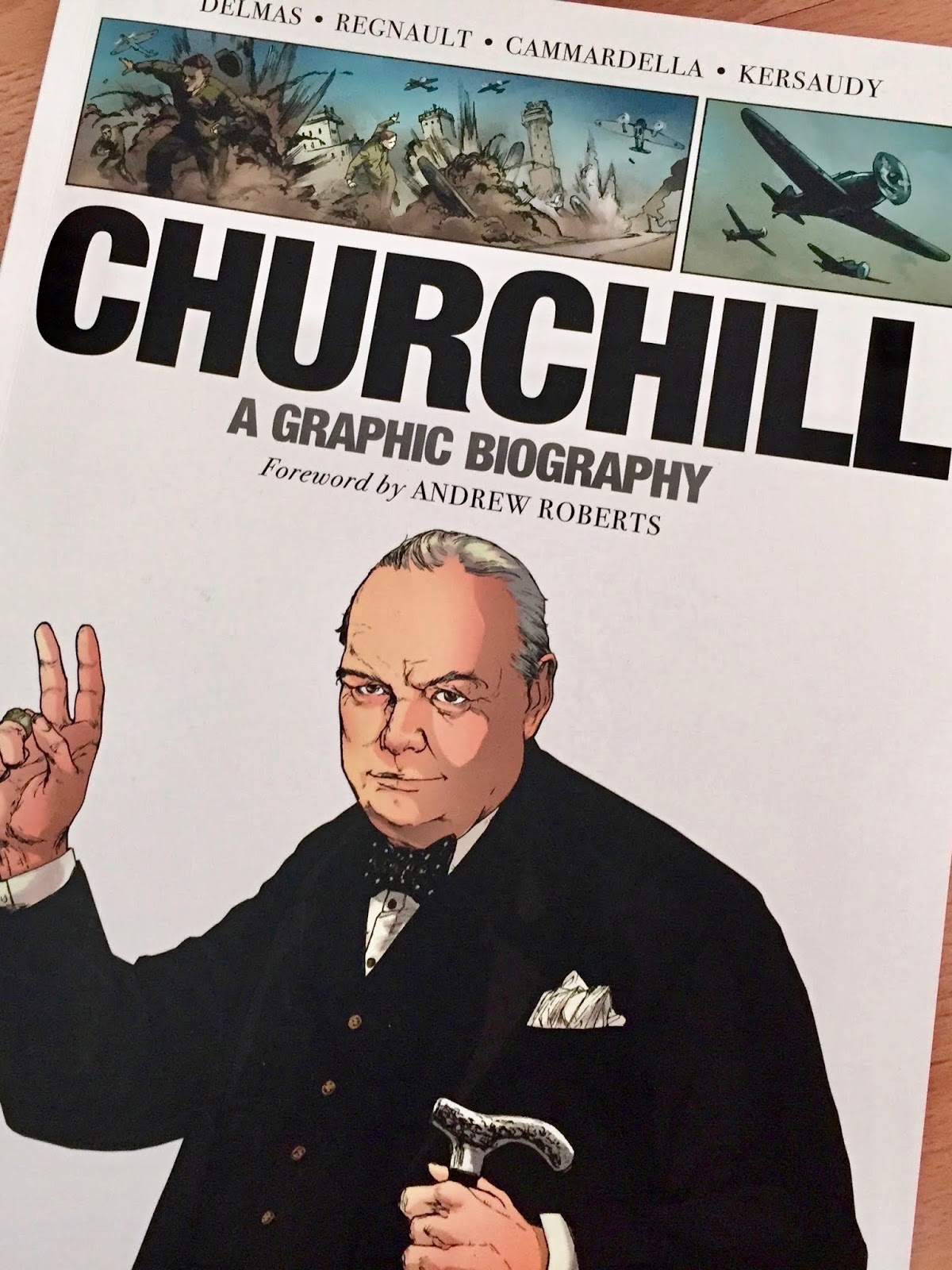
Churchill: A Graphic Biography

Yes, I am reviewing a comic book now! But, trust me - it is seriously good.

Now, Churchill is one fellow that is very hard to summarize. With such a rich and long life in various positions, almost an impossible task. But I´d say that Vincent Delmas has succeeded, both because of the comics and the superb introduction, which is more like an illustrated article.

Of course, lots of important stuff is not part of Churchill: A Graphic Biography, and as a Nordic reader I wanted more about Norway 1940. Still, most of the key moments in his life are here. Speaking about Norway - the heavy water sabotage operation is in the book.

My one real criticism is that the military hardware shown could have been more correct and detailed. But, generally speaking, this is one of the best, if not the best, fact-based comic books that I have read.

One subject that takes up a fairly large part in the final pages of the book is the failure to secure Poland´s independence. Rightly so!

Being a history nerd you have either seen or will probably see the brilliant historical drama web television series "The Crown" created and principally written by Peter Morgan for Netflix. Well, here comes a suggestion for you TV people out there. Check out Churchill: A Graphic Biography by Vincent Delmas etc. Because it is both brilliant and credible. I suspect that this has a lot to do with Francois Kersaudy, the project´s historical consultant. It should be possible to use Churchill: A Graphic Biography as the basis for a Netflix movie, or even a TV series.

Monday, March 09, 2020

A Deniable Operation Under The Swedish Flag

SAS VC holder Anders Lassen (1st from the left) always catches my attention.

The story they presented was that they were a neutral Swedish crew on a neutral Swedish yacht. In fact, they were a group of SOE agents on an incredibly daring mission, commanded by an actual "M", with whom Ian Fleming worked. This is a book that especially Nordic SOE, SAS & Fleming/Bond buffs can appreciate.

While the Swedish flag was mere camouflage, there were actually Danes aboard, one of whom later would join the SAS and earn a VC, Anders Lassen. Thus it should already be apparent that Ian Fleming & SOE´s Operation Postmaster by Brian Lett is of special interest to Danish military history buffs. Norwegian WWII buffs also have several reasons to pick up this book, because Brigadier Colin Gubbins was "M" and he had a great deal to do with Norway from 1940.

Well, what kind of special operation is Ian Fleming & SOE´s Operation Postmaster about? In 1941 the British started receiving reports that German submarines were using rivers in French parts of Africa for refuelling. At the time, the Special Operations Executive (SOE) was a new outfit with many enemies, not just among the enemy. The SOE had to prove its worth. The cunning plan was to sail a "Swedish" SOE ship, with some great characters, to West Africa and locate German submarine bases. But having arrived in the area the main aim became to steal enemy ships from a neutral Spanish port on the volcanic island of Fernando Po. I will here not give away the wonderful story of what happened but just say that the British Government lied in order to conceal British responsibility for the operation, and basically recommend that you read this book yourself.

Being the author that I am, I do not think that the characterization of Sweden as "pro-German" in Lett´s book is fair. Regardless if one means the Swedish state or the majority of the Swedish people, the largest Swedish sympathies were about Finland, Norway and Denmark. Yes, there were Swedish Nazis and pro-German sympathies, but they never dominated. The thousands of Swedish citizens in Finnish, US and Norwegian service can be compared with the 200 in various German units. For more about Sweden during WWII please turn to e.g. John Gilmour or yours truly.

Nevertheless, Brian Lett´s book is an inspiring and exciting book that should please not just SOE and Fleming/Bond buffs. First published in 2012, the edition I got is from last year. Brian Lett has written other books about special ops and I just recently became aware of his SOE`s Mastermind - Sir Colin Gubbins, a book that I very much look forward to reading.

Thursday, February 20, 2020

The Real James Bonds

That strange gun on the cover is a Welrod, a British bolt action suppressed pistol.

Having reviewed Nigel West´s Secret War: The Story Of SOE, I must of course also review his take of the organization that SOE quite often found itself in conflict with, MI6/SIS, i.e. the home of James Bond.

Being an entirely factual book, Nigel West´s MI6: British Secret Intelligence Service Operations 1909-1945, does not waste words on James Bond and only mentions Ian Fleming on one page. Fleming is mentioned not because of his later secret agent novels but due to the fact that he during WWII was an assistant to the Director of Naval Intelligence. However, it is hard not to think of Captain America´s enemy Red Skull when reading about agent SKULL, one of the most important double agents of the war in West´s opinion.

Secret intelligence operations can be hard to explain and summarize. Yet, West often manages to do so. One of the most catastrophic aspects of the the initial stage of the intelligence war 1939-45 is how almost unbelievably unprepared the British were for the eventuality of Germany actually overrunning other countries. In spite of six years of Hitler in command of Germany the SIS had set up no stay-behind networks. Initially there were not even aircraft to fly agents into occupied Europe. Such a unit, 419 Flight (Special Duties), was set up only in July 1940.

Well, what about my favorite aspects of any WWII book, the Nordic aspects? The Norwegian heavy water is of course covered but after the German invasions of 1940 the SIS was itself not that active in Norway and Denmark. In those countries intelligence gathering was mainly performed by the SOE. Stockholm was much more of a stage for the SIS, and West provides a wonderful picture of how absurd it was to be stationed there considering that "[...] personnel from the German, Japanese and British [embassies were] all visiting the seaside together on Sundays during the Swedish summer".

Nigel West is very clear about his view of SIS performance in Stockholm during WWII: "The Stockholm Station was arguably the most successful of the war". West also states that thanks to "unofficial assistance" from Swedish military intelligence, more than fifty Norwegians were detained in Sweden as known infiltration agents from the Sicherheitsdienst in Oslo.

Like West´s SOE book, MI6 is not new but a new edition of a 1983 book. Still, MI6 by Nigel West is a highly readable book and ought to be a useful source for many years yet to come.

Friday, January 24, 2020

The Memoirs of Karl Döenitz

The front cover of the latest edition of this classic Third Reich source.

For students of Germany´s WWII submarine warfare and the very last days of the Greater German Reich (the official name until 23 May 1945) there is one source that must be considered a real must read, The Memoirs of Karl Döenitz.

Many forget that the last head of state of the Großdeutsches Reich, i.e. Greater German Reich, was not Adolf Hitler but Grand Admiral Karl Döenitz (more commonly spelt Dönitz). In 1936 he had been made the supreme submariner, in German Führer der U-Boote. In 1943 he was made supreme commander of the whole German Navy, the Kriegsmarine. After Hitler´s suicide it was Dönitz who headed the remnants of the Third Reich until it ceased to exist on 23 May 1945. Thus it should be clear that there are several reasons why his memoirs have again appeared, in a new paperback version. What is my take then? Well, there is a whole lot here that is still of military relevance, in spite of all technological advances. This is because Dönitz was a very gifted officer and strategist. Had he earlier on been given more power it seems probable that he would at the very least have prolonged the war by some months (or even more) with his submarine "wolf packs". Thus it was fortunate for the Allies that he reached the naval top only in 1943.

The Dönitz memoirs are naturally filled with U-boats and naval strategy and, coming from Dönitz himself, this of course makes fascinating and also very important reading for all naval strategy and U-boat buffs. But, those major ingredients aside, what does Dönitz write about WWII in a more general sense? His mindset becomes pretty clear. Let me quote from page 52: "Whether any war is a war of aggression or not is a purely political question. The policy of any and every country will be to seek to prove that its adversary was the aggressor or that it had itself been menaced and had been compelled to act in self-defense."

Let me also quote a sentence that I find very telling from the following page: "At the outbreak of hostilities, then, I had no idea in my head other than to do my duty." In other words, the political side of these memoirs offers no surprises - it is yet another "my duty" memoir by a former member of the National Socialist German Workers' Party - which he joined on 1 February 1944.

The Dönitz memoirs can at times be a bit demanding reading, but the chapter about the invasion of Norway has an optimal length and explains the major technological significance of this campaign for the Kriegsmarine, the so called "torpedo crisis".

The impact of one British midget submarine, the X6, and its attack on 22 September 1943 in an Arctic fjord (Kåfjord) is pretty clear from these memoirs. The explosion under the German battleship Tirpitz´s stern, caused by a mine from the X6, meant not only big problems for the Kriegsmarine, but a "grave strategic handicap", according to Dönitz. In other words, no small praise for the commander of X6, Commander Donald Cameron VC. Actually, the X6 was not alone in managing to plant a mine, as the X7 also did so, but the point still is that Dönitz credited one midget sub to have caused a "grave strategic handicap".

American readers might want to go straight to the chapter "Operations in American Waters". Had Dönitz received the "timely warning" of the German declaration of war against the United States that he had requested from Hitler, the US would probably have suffered "a real blow".

Speaking about the Großdeutsches Reich, what was to have come after it according to national socialist visions? The answer is the Großgermanisches Reich, for short. The full name being the Großgermanisches Reich der Deutschen Nation meaning the Greater Germanic Reich of the German Nation. But what Dönitz inherited from Hitler was something very, very different.

As a Swede it is interesting to read about how Dönitz viewed the "Schellenberg plan" to surrender German-occupied Norway to Sweden.

The epilogue does not lack self-criticism but is also the one part of the book that should have been considerably longer.

Thursday, January 16, 2020

Lofoten Commando´s Incredible Odyssey

He fought in France, Norway, Tunisia, Italy and then from France to Germany.

Not that many of the first British commandos managed to fight all the way to Germany. Fewer still managed to experience danger in so many different places as did Leslie Young. His son, Sir Nicholas Young, has researched his wartime odyssey not least by going to Norway´s Lofoten Islands.

Having survived Dunkirk, Leslie Young was among the first to volunteer for a new special force, the Commandos. He managed to become one of the "specially trained troops of the hunter class" and the author lets us know what early wartime commando training was like. Being a Nordic in love with the awe-inspiring Lofoten Islands I then was amazed to read details of the famous Lofoten raid that I was unaware of. There is also some comic relief: a telephone exchange was captured and one of the British officers could not resist the temptation to send a telegram "To A. Hitler, Berlin". But I will not spoil your reading by here revealing the text of the telegram.

The Lofoten Islands of today are also in the book, as the author did research there in 2011, i.a. visiting one of the best military history museums in Norway, the Lofoten War Museum in Svolvaer. Back in 1941 it was the telegraph station and post office, and was the first building to be taken over by the Commandos, who landed just a few metres away. I can only agree with Sir Young: "The museum houses an extraordinary collection of uniforms, photos, flags, pieces of old weaponry [...]".

Having checked off Norway on his bucket list (I am just kidding about the list), Leslie Young then served on the battlefields of Tunisia - and of course, his son (the book´s author) went there too and could locate the very spot where his father made some fateful observations.

The book also has many amazing glimpses of Leslie Young´s life on the run in Italy (with villages in shocking conditions) and while fighting in Normandy against i.a. the 12th SS Panzer Division "Hitlerjugend". Strangely enough he then reaches the same area where he fought back in 1940. This last stage of the war in North West Europe is grim, but once in a while the advancing British units also get superb treatment from grateful locals. Reading about this and the author´s research travels inspires me and makes me recall similar feelings, how such travels forge deeper relationships.

What about the skull insignia on the cover? It is the badge of the unit that Major Leslie Young belonged to during the Lofoten raid, No. 4 Commando.

Finally some words about the book´s author - he began as a lawyer, then discovered his vocation as a charity worker and was knighted in 2000 for services to cancer care and in retirement remains a charity trustee and is chair of the Monte San Martino Trust, set up by former PoWs in Italy. This trust will receive proceeds from the sale of Escaping with his Life.

Wednesday, November 20, 2019

No Surrender

German troops march past the Norwegian parliament in 1940. PHOTO: Riksarkivet

In a few months the 80th anniversary of the German invasion of Norway in April 1940 will be highlighted not only here in Scandinavia. There are a number of books in English about the invasion, but the aftermath is not as well documented in English. However, a key source has recently become available: No Surrender.

There is something very inspiring with well-written personal accounts of occupation resistance and imprisonment. No Surrender is one of the strongest, not least because Hans Cappelen wrote it just some months after the war. In Norwegian his WWII memoir was published as Vi ga oss ikke already in 1945. Because of this and his postwar work for the public he became rather well known in Norway, in 1970 he was made a Knight, First Class of the Order of St. Olav.

No surrender contains plenty of exciting scenes due to high stakes and daring. In spite of the grim subject matter and proximity to the events, Hans Cappelen includes humour and portrays his captors in a credible manner. Several conversations that Hans Cappelen had with Germans quite surprised me.

This book is of particular importance not just because it covers the early resistance period, Hans Cappelen was a founding member of the resistance and when he was arrested in 1941 he was tortured and eventually deported to Germany as a "Nacht und Nebel" prisoner, destined to disappear in "Night and Fog" (the meaning of "Nacht und Nebel"). He thus got to know some of Nazi Germany’s most infamous camps, among them Natzweiler, Dachau and Buchenwald. In the spring of 1945 he was rescued by Count Folke Bernadotte’s "White Buses" and transported to Sweden.

RAF veteran and now also translator of No Surrender, J. Basil Cowlishaw, first met Hans Cappelen in the spring of 1949, when Cappelen approved his job application. They became friends and often met each other until Cappelen passed away in 1979. The result of the translator´s excellent understanding of the history and language in question is a wonderful translation - just a pity it has been released only this year. But better late than never.

I usually don´t write where reviewed books are available, but as there are yet very few places that have No Surrender, I will end this review by recommending the Amazon page.

Saturday, October 26, 2019

German Warbird Discovery In Arctic Lake Now Filmed

Two Swedish divers have now released the first film of this Junkers Ju 52 at a depth of 75 metres. PHOTO: Simon Kenttä (who owns both this photo and the films)

The report of this discovery was printed yesterday, in the Swedish newspaper Expressen. The report and part of the first film footage went online the day before. Yours truly is the reporter and all images except those from WWII come from one of the divers, Simon Kenttä.

Resting at 75 metres in a lake north of Norwegian Narvik and not far from Sweden, the Junkers Ju 52 "Ace of Hearts" has so far not been filmed, only last year photographs of the plane appeared online. In the same lake, Hartvikvatnet (also Hartvigvannet), there is a much more accessible Ju 52 wreck. As a consequence, that plane is very incomplete. The Junkers aircraft now in question constitutes a contrast - it has an amazing amount of details and lots of paint and markings including the ace of hearts.

The Junkers Ju 52 "Ace of Hearts" helps tell the story of the battle of Narvik - that provides important lessons about WWII in Scandinavia.

Diving 75 metres down in an Arctic lake is extremely dangerous and requires special training, equipment and safety precautions. Before one dives one also has to be very sure about the exact location of the target. Also please bear in mind that German WWII equipment left behind in Norway belongs to the Norwegian state, meaning the Norwegian defence museums.

To very easily examine one of the Junkers Ju 52 machines that went down into lake Hartvikvatnet, see the one taken out of the lake in 1983 and preserved in the splendid Norwegian Aviation Museum in Bodö. Here is the link to immediately see their Ju 52.

Saturday, October 12, 2019

Secret War - Not Just About SOE

An attractive cover for a special operations reference book not just about the SOE.

When you have read about Special Operations Executive (SOE) operations in certain countries you might want to better understand the SOE in general - why it was created in 1940, how it began its existence and what became of it. Secret War by Nigel West answers such questions and has some parts of particular interest to Nordic readers.

Secret War: The Story Of SOE includes the original Cabinet memorandum, drafted by Neville Chamberlain in July 1940, which created SOE. West´s book has many details about the origins of SOE and the serious rivalry it from the start experienced with the Secret Intelligence Service (SIS, also known as MI6). Nigel West even writes that an "undeclared war" existed between the SOE and SIS. West also makes it clear that he has studied not just the successful SOE operations, and that he wants to shed light on how the SOE tipped the resistance balance in favor of Communist groups in several countries, not only in Yugoslavia.

West does not devote many paragraphs to describe Operation Gunnerside, the successful SOE action in the Norwegian mountains to stop the German development of nuclear weapons, through the destruction of heavy water production and stocks. But that operation is well documented in several other books and West instead clarifies how Gunnerside was to the benefit of the status of SOE in general.

Early SOE activities in Sweden and Norway are covered rather extensively. One wishes West had written as much about the last activities, that interest me more. Still, one learns some important facts about the SOE in all of Scandinavia and regarding the Danes I learnt of something I had no idea of - how the US Office of Strategic Services (OSS) had plans for a Danish Operational Group (OG). In fact, several pages of this book are very informative about the OSS.

If you are mainly interested in SOE and OSS activities in France, this book will be even more useful to you.

The edition of Secret War: The Story Of SOE that I have just reviewed is the one that was printed this year (2019). The first edition was published in 1992. I believe it remains a good investment.

Thursday, September 19, 2019

Hitler´s Largest Arctic Project Then & Now

Org. Todt chief Albert Speer (right) with General Eduard Dietl in the Arctic 1943. Attribution: Bundesarchiv, Bild 183-J16636 / CC-BY-SA 3.0

Thanks to a Norwegian friend I was recently invited to a WWII research meeting right beside Hitler´s largest Arctic project, his railway line that was meant to end in Kirkenes by the Finnish (now Russian) border. This blog post is mainly to provide a visual idea of the amazing days we spent up there.

The Organisation Todt (OT) was a German paramilitary engineering organization named after Fritz Todt, an engineer and senior Nazi leader. The OT was one of the Wehrmachtgefolge, German Armed Forces auxiliaries. The organization was responsible for implementing the vision of connecting by rail south Norway with Kirkenes, the northeasternmost town not far from Soviet Murmansk. This meant working in one of the most challenging landscapes on earth due to a staggering amount of mountains and fjords. The Arctic climate and often total lack of roads for supporting motor vehicles did not make things easier. As usual, the OT would rely on forced labour, mostly Soviet and Yugoslav prisoners of war. The section responsible for this most extreme railway project was called OT-Einsatzgruppe "Wiking". The project was pursued right to the very end of the Third Reich, at the cost of thousands of lives.

Our trip last week began with a visit at Klungset, beside the town of Fauske, about 70 kilometres inside the Arctic Circle. Klungset is probably the most intact OT base that there is in 2019, and one of few WWII German military hospitals still around. Last time I visited it, 18 years ago, it was in a deplorable state. Now several parts of it have been restored. In 2015 it became protected by the Directorate for Cultural Heritage in Norway.

The German hospital in Klungset shortly after the German capitulation.

The same place the other day, now in private Norwegian hands.

In connection with the huge Arctic railway project to Kirkenes, this hospital complex was built in 1942-43, mainly for the benefit of German OT staff. Construction was carried out by forced labour, local companies, a southern Norwegian construction company and others. When the base was completed in 1943, it consisted of 12 buildings with a total capacity of 200 beds. Today, four of these buildings are preserved. Although the bulk of the labour force consisted of prisoners of war, this group received limited treatment at the base. This changed radically after the German capitulation, when, in June 1945, the US Army flew Swedish Red Cross personnel, diet foods and medical equipment to treat the most ill Soviet former prisoners of war. Thus American C-47 aircraft flew a Swedish hospital staff from Luleå to Bodö, not far from Klungset. The above 1945 photo from Klungset shows the main building with Swedish medical staff and also some Germans under Norwegian command.

This Phänomen was an ambulance at the base and after 1945 used by a farmer.

Hopefully Klungset will sometime in the future also become a true museum. We saw why that would be a good idea - not only has the main building been restored, another building has been left virtually untouched since 1945 and contains many both unusual and moving artifacts and photographs. Just walking around on the base, especially in the cellars, is a remarkable experience in itself. The two gentlemen who own the premises also have some relevant WWII military vehicles, some virtually untouched since the war, some restored.

US Army Dodge ambulance with a German BMW R75 motorcycle in Klungset.

Thank you so much, Trond Ole Slettvoll, for showing us around on Klungset. Our next big thank you goes to Trond Inge Mathisen of Hamaröy, whose WWII researcher event took place by a mountain lake 90 kilometres north of Klungset, beside the last large German tunnel that was made before the German capitulation. It was never completed and is dangerous to enter, but can be entered with a guide and special equipment - see the last photograph below.

All around our research meeting there were traces of German slave labour camps.

The foundations for a German Arctic railway bridge between two mountains.

The quality of the work is just amazing but also largely covered by vegetation.

German bridge foundations are everywhere but the bridges long gone (sold).

Some of the construction equipment used by the slave workers is still in situ.

The WWII weekend brought together more than 50 Norwegians and 3 Swedes.

Part of the weekend was the unveiling of a new memorial by the last large tunnel.

One of the WWII Soviet (Norwegian) reenactors unveiled the memorial.

The text to the memory of the prisoners of war is in Russian and Norwegian.

Entering the last tunnel should only be done with safety equipment and a guide.

What is inside the last large German Arctic railway tunnel? First, please understand that abandoned WWII tunnels should not be entered, or at least not without safety equipment and a guide, as they are more or less unsafe for various reasons. Well, what about my experiences from the above tunnel? I am saving them and the relevant photos for a manuscript I hope to finish next year which will contain largely unknown and unpublished material. You can support this by reading my books, two are available in English (check Amazon etc). The next one (in October) in Swedish you can see below. It contains chapters i.a. about some very large gifts from Soviet former prisoners of war in Sweden and a previously unknown Allied base on Swedish soil - the Norwegian SOE operators on the cover came from one of these bases. If you are wondering about the submarine on the cover it is U 3503, one of the extremely advanced German submarines of the type XXI class, en route to Norway but scuttled on 8 May 1945 west of Göteborg, Sweden.