220 pages of amazing special operations in some truly exotic places.
When one hears "special operations during WWII" few will think of other continents than Europe and Africa. But special ops were of course also one method of fighting in Asia. David Miller´s book focuses on three special operations in Asia and especially one of them will surprise just about everyone - as the target was not Japanese but German. There is a Swedish connection, too.
German U-boat successes against Allied merchant ships in the Indian Ocean in 1942-43 became a real problem for the Allies. In fact, German naval forces were active in several parts of Asia, and more active than I had imagined. David Miller´s book has been a real eye-opener for me regarding this aspect of German operations. All three ops featured in his book Special Operations South-East Asia 1942-1945 are amazing to learn about, but the struggle against Japanese forces is what you expect and therefore the Special Operations Executive (SOE) raid against the Germans in Goa is the most spectacular.
At the time, i.e. early 1943, Goa was formally not part of India but Portugal, which explains the German presence. A charming aspect of the British Goa raid, Operation Longshanks/Creek, was that enthusiastic and somewhat unlikely volunteers from the Calcutta Light Horse played a key role. Now, some of you who read this blog post may now be saying "that rings a bell", because you have seen a film from 1980 starring Roger Moore and David Niven, called "The Sea Wolves". That film, based on the 1978 James Leasor novel Boarding Party, was an early signal to the world about the particularly secret SOE operation. But I think you will find this book to be more interesting than that film, not least because it busts a few myths present in the movie.
You might recall from my blog post "A Deniable Operation Under The Swedish Flag" that Swedish aspects manage to pop up even in some very faraway places. Well Special Operations South-East Asia 1942-1945 reminds also of how the US Department of State chartered the Swedish ocean liner Gripsholm as an exchange and repatriation ship. It carried many Japanese and Germans to ports where she could pick up US and Canadian citizens - and bring them home. She sailed with a Swedish captain and crew and made 12 round trips. Exchanges took place at neutral ports such as Goa in Portuguese India. In the article below is a photo showing the Gripsholm in Goa 1943, unloading Red Cross supplies for internees and prisoners of war.
The Gripsholm in The Shanghai Evening Post and Mercury on 24 December 1943.
About Me
- Lars Gyllenhaal
- Author, film researcher and member of the Swedish Military History Commission.
Showing posts with label movies. Show all posts
Tuesday, July 14, 2020
Wednesday, April 29, 2020
When The SAS Stormed An Embassy
The SAS operation "Nimrod" took place here in 1980. My photo from 2019.
30 April 2020 it is 40 years since the start of one of the most famous anti-terrorist operations ever. In the end, Special Air Service (SAS) operators saved all but one of the remaining hostages. Do watch the movie about the event, but bear in mind that it says very little about one lesson from the event - a lesson that we ought to be more aware of.
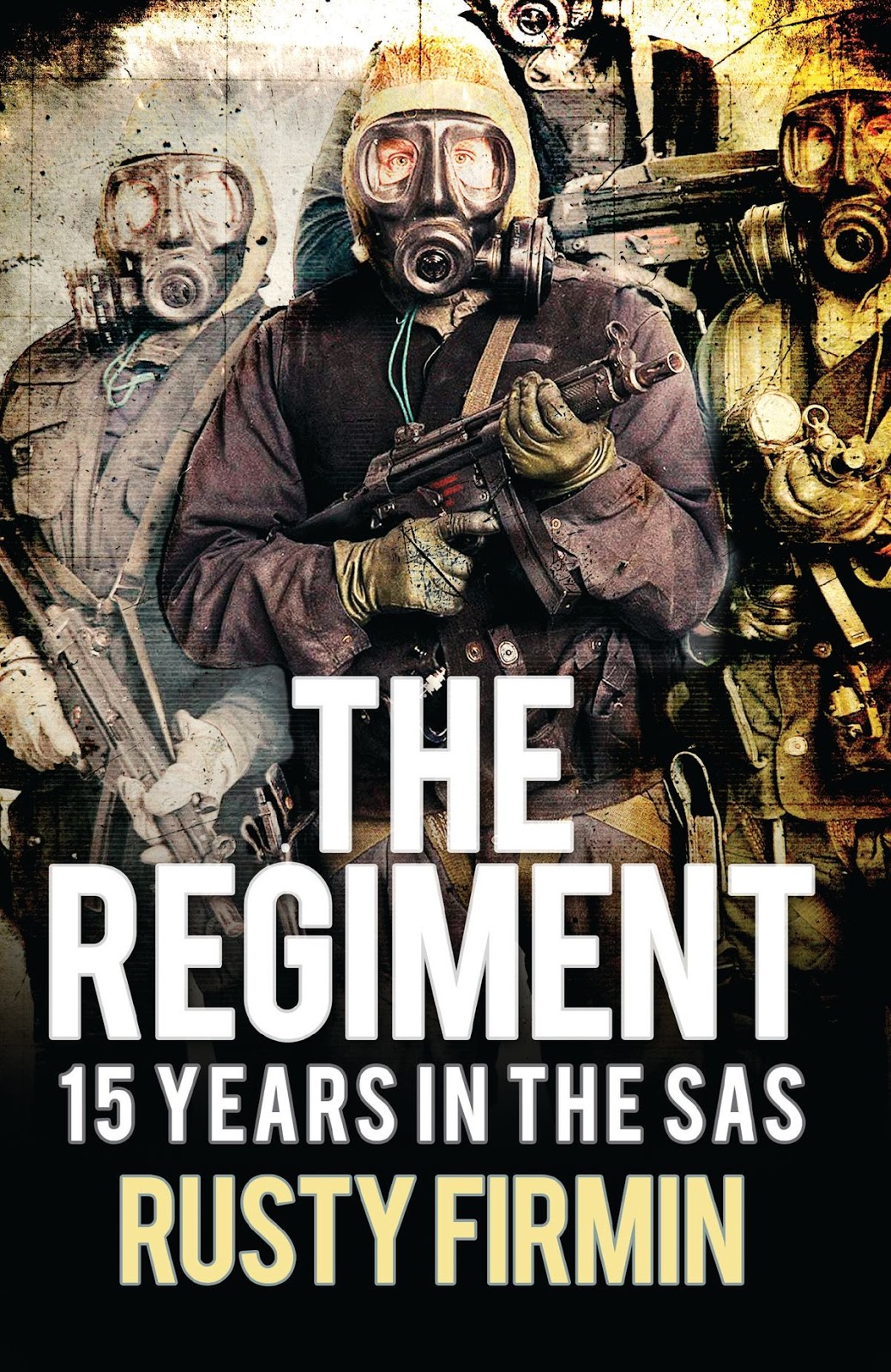
As a kid in the early 1980s I was favourably impressed by the abseiling SAS soldiers that hit the global news. But their appearance at the Iranian embassy in London was also a bit terrifying. Dressed largely in black, with their faces inside black respirators and wielding black submachine guns (Heckler & Koch MP5s), they looked rather sinister (Darth Vader-ish). Naturally, as soon as "6 Days" was released I was keen to see how a detailed reenactment of the event would look like. Well, it is not just about the 17 minute SAS assault, but about the whole Iranian embassy siege of 30 April to 5 May 1980. The siege situation is presented from three perspectives and it is quite moving to follow the negotiator Max Vernon (Mark Strong). But, being fond of books about the SAS, I was more interested in the SAS perspective, i.e. Rusty Firmin (Jamie Bell). "6 Days" made me wonder about some of his decisions and therefore I wanted to know more from the actual Rusty Firmin. Here is the book by him that I then got:
The book Rusty Firmin wrote about his career in the SAS. Some surprising insights.
Rusty Firmin´s The Regiment (2015) explains a key moment in the embassy that the movie "6 Days" portrays rather poorly, it seems to me. There is also the book focusing on the siege that Firmin wrote together with Will Pearson, entitled Go! Go! Go! (2011), and then there is e.g. Who Dares Wins (2009) by Gregory Fremont-Barnes. But hey, no book will probably affect the general public´s knowledge about the event as much as the movie "6 Days", which is why I decided to write this blog post. In spite of everything that I appreciate in "6 Days", there is one big thing the film makers could have done better. Who was behind the whole thing? Of course, the movie informs a bit about the terrorist group that took over the embassy, the Democratic Revolutionary Front for the Liberation of Arabistan. However, there was a state behind the group: Iraq. The Iraqi state under Saddam Hussein not only prepared, financed and supplied the terrorists (e.g. with Soviet RGD-5 hand grenades and Czechoslovak Skorpions). One of their Iraqi intelligence handlers had even taken them to London. In "6 Days" this is summarized too much, the relevant scene is so short that some may miss it.
So, what on the surface looked like the act of a terrorist group of Arabian separatists from Iran was more like an Iraqi strike against Iran. Byt why is this small proxy war in London forty years ago relevant for us in 2020? Well, there were several terrorist actions during the 1980s, in different countries, that still today are sometimes not portrayed as what they mostly were, war by proxy. That is a form of warfare that has made a comeback in recent years, and therefore we need to be able to identify and understand it. Iraq under Saddam was not the main culprit, usually it was one or more security/intelligence agencies from the Soviet bloc. But these quite often used terrorists, not least Arab terrorists. This modus operandi even affected my native Sweden, and it took many years for Swedes to start realizing this.
Seeing the Iranian embassy in London today is just like seeing it on 30 April 1980. It was seriously damaged at the end of the siege but has been nicely restored. It is easy to see the embassy yourself as it is in the heart of London. There are some other places connected to SAS history not far from the embassy and I will be writing about these in a London guide that I intend to release here in a month or so.
30 April 2020 it is 40 years since the start of one of the most famous anti-terrorist operations ever. In the end, Special Air Service (SAS) operators saved all but one of the remaining hostages. Do watch the movie about the event, but bear in mind that it says very little about one lesson from the event - a lesson that we ought to be more aware of.
As a kid in the early 1980s I was favourably impressed by the abseiling SAS soldiers that hit the global news. But their appearance at the Iranian embassy in London was also a bit terrifying. Dressed largely in black, with their faces inside black respirators and wielding black submachine guns (Heckler & Koch MP5s), they looked rather sinister (Darth Vader-ish). Naturally, as soon as "6 Days" was released I was keen to see how a detailed reenactment of the event would look like. Well, it is not just about the 17 minute SAS assault, but about the whole Iranian embassy siege of 30 April to 5 May 1980. The siege situation is presented from three perspectives and it is quite moving to follow the negotiator Max Vernon (Mark Strong). But, being fond of books about the SAS, I was more interested in the SAS perspective, i.e. Rusty Firmin (Jamie Bell). "6 Days" made me wonder about some of his decisions and therefore I wanted to know more from the actual Rusty Firmin. Here is the book by him that I then got:
The book Rusty Firmin wrote about his career in the SAS. Some surprising insights.
Rusty Firmin´s The Regiment (2015) explains a key moment in the embassy that the movie "6 Days" portrays rather poorly, it seems to me. There is also the book focusing on the siege that Firmin wrote together with Will Pearson, entitled Go! Go! Go! (2011), and then there is e.g. Who Dares Wins (2009) by Gregory Fremont-Barnes. But hey, no book will probably affect the general public´s knowledge about the event as much as the movie "6 Days", which is why I decided to write this blog post. In spite of everything that I appreciate in "6 Days", there is one big thing the film makers could have done better. Who was behind the whole thing? Of course, the movie informs a bit about the terrorist group that took over the embassy, the Democratic Revolutionary Front for the Liberation of Arabistan. However, there was a state behind the group: Iraq. The Iraqi state under Saddam Hussein not only prepared, financed and supplied the terrorists (e.g. with Soviet RGD-5 hand grenades and Czechoslovak Skorpions). One of their Iraqi intelligence handlers had even taken them to London. In "6 Days" this is summarized too much, the relevant scene is so short that some may miss it.
So, what on the surface looked like the act of a terrorist group of Arabian separatists from Iran was more like an Iraqi strike against Iran. Byt why is this small proxy war in London forty years ago relevant for us in 2020? Well, there were several terrorist actions during the 1980s, in different countries, that still today are sometimes not portrayed as what they mostly were, war by proxy. That is a form of warfare that has made a comeback in recent years, and therefore we need to be able to identify and understand it. Iraq under Saddam was not the main culprit, usually it was one or more security/intelligence agencies from the Soviet bloc. But these quite often used terrorists, not least Arab terrorists. This modus operandi even affected my native Sweden, and it took many years for Swedes to start realizing this.
Seeing the Iranian embassy in London today is just like seeing it on 30 April 1980. It was seriously damaged at the end of the siege but has been nicely restored. It is easy to see the embassy yourself as it is in the heart of London. There are some other places connected to SAS history not far from the embassy and I will be writing about these in a London guide that I intend to release here in a month or so.
Labels:
books,
Cold War,
Iran,
Iraq,
movies,
New Zealand,
SAS,
United Kingdom
Monday, March 09, 2020
A Deniable Operation Under The Swedish Flag
SAS VC holder Anders Lassen (1st from the left) always catches my attention.
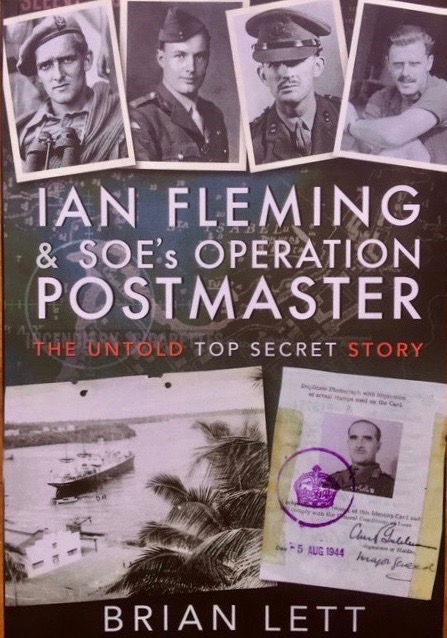
The story they presented was that they were a neutral Swedish crew on a neutral Swedish yacht. In fact, they were a group of SOE agents on an incredibly daring mission, commanded by an actual "M", with whom Ian Fleming worked. This is a book that especially Nordic SOE, SAS & Fleming/Bond buffs can appreciate.
While the Swedish flag was mere camouflage, there were actually Danes aboard, one of whom later would join the SAS and earn a VC, Anders Lassen. Thus it should already be apparent that Ian Fleming & SOE´s Operation Postmaster by Brian Lett is of special interest to Danish military history buffs. Norwegian WWII buffs also have several reasons to pick up this book, because Brigadier Colin Gubbins was "M" and he had a great deal to do with Norway from 1940.
Well, what kind of special operation is Ian Fleming & SOE´s Operation Postmaster about? In 1941 the British started receiving reports that German submarines were using rivers in French parts of Africa for refuelling. At the time, the Special Operations Executive (SOE) was a new outfit with many enemies, not just among the enemy. The SOE had to prove its worth. The cunning plan was to sail a "Swedish" SOE ship, with some great characters, to West Africa and locate German submarine bases. But having arrived in the area the main aim became to steal enemy ships from a neutral Spanish port on the volcanic island of Fernando Po. I will here not give away the wonderful story of what happened but just say that the British Government lied in order to conceal British responsibility for the operation, and basically recommend that you read this book yourself.
Being the author that I am, I do not think that the characterization of Sweden as "pro-German" in Lett´s book is fair. Regardless if one means the Swedish state or the majority of the Swedish people, the largest Swedish sympathies were about Finland, Norway and Denmark. Yes, there were Swedish Nazis and pro-German sympathies, but they never dominated. The thousands of Swedish citizens in Finnish, US and Norwegian service can be compared with the 200 in various German units. For more about Sweden during WWII please turn to e.g. John Gilmour or yours truly.
Nevertheless, Brian Lett´s book is an inspiring and exciting book that should please not just SOE and Fleming/Bond buffs. First published in 2012, the edition I got is from last year. Brian Lett has written other books about special ops and I just recently became aware of his SOE`s Mastermind - Sir Colin Gubbins, a book that I very much look forward to reading.
The story they presented was that they were a neutral Swedish crew on a neutral Swedish yacht. In fact, they were a group of SOE agents on an incredibly daring mission, commanded by an actual "M", with whom Ian Fleming worked. This is a book that especially Nordic SOE, SAS & Fleming/Bond buffs can appreciate.
While the Swedish flag was mere camouflage, there were actually Danes aboard, one of whom later would join the SAS and earn a VC, Anders Lassen. Thus it should already be apparent that Ian Fleming & SOE´s Operation Postmaster by Brian Lett is of special interest to Danish military history buffs. Norwegian WWII buffs also have several reasons to pick up this book, because Brigadier Colin Gubbins was "M" and he had a great deal to do with Norway from 1940.
Well, what kind of special operation is Ian Fleming & SOE´s Operation Postmaster about? In 1941 the British started receiving reports that German submarines were using rivers in French parts of Africa for refuelling. At the time, the Special Operations Executive (SOE) was a new outfit with many enemies, not just among the enemy. The SOE had to prove its worth. The cunning plan was to sail a "Swedish" SOE ship, with some great characters, to West Africa and locate German submarine bases. But having arrived in the area the main aim became to steal enemy ships from a neutral Spanish port on the volcanic island of Fernando Po. I will here not give away the wonderful story of what happened but just say that the British Government lied in order to conceal British responsibility for the operation, and basically recommend that you read this book yourself.
Being the author that I am, I do not think that the characterization of Sweden as "pro-German" in Lett´s book is fair. Regardless if one means the Swedish state or the majority of the Swedish people, the largest Swedish sympathies were about Finland, Norway and Denmark. Yes, there were Swedish Nazis and pro-German sympathies, but they never dominated. The thousands of Swedish citizens in Finnish, US and Norwegian service can be compared with the 200 in various German units. For more about Sweden during WWII please turn to e.g. John Gilmour or yours truly.
Nevertheless, Brian Lett´s book is an inspiring and exciting book that should please not just SOE and Fleming/Bond buffs. First published in 2012, the edition I got is from last year. Brian Lett has written other books about special ops and I just recently became aware of his SOE`s Mastermind - Sir Colin Gubbins, a book that I very much look forward to reading.
Labels:
Africa,
books,
Denmark,
France,
Germany,
Kriegsmarine,
movies,
Norway,
SAS,
SOE,
Spain,
Sweden,
United Kingdom,
Wehrmacht,
WWII
Sunday, December 08, 2019
Tolkien At War
Here in the French trenches things happened that greatly influenced J.R.R. Tolkien.
The new Tolkien movie, simply called "Tolkien", takes place in England and France. It is about J.R.R. Tolkien's childhood, youth and time at the front during the First World War. The film seems to have received mostly lukewarm reviews - well, here comes my take.
It seems that few Swedish cinemas (any at all?) have shown "Tolkien". Maybe it was released directly on DVD in Sweden? However, I have now seen it, on DVD, and my opinion is that it is not only well worth seeing, it is simply wonderful. As a film, it is gripping, romantic and beautiful. AND the director is Nordic, Dome Karukoski. What, a director from Finland? Actually, not so strange, considering that the Finnish language was important for Tolkien's saga languages, as was Kalevala - Finland's national epic. The Finnish language is actually mentioned in the film, and rightfully so.
In other words, ignore the reviews and watch the movie yourself. If you then want to know more about Lieutenant Tolkien's war experiences, I highly recommend Tolkien and the Great War by John Garth. A fantastic read if you are really interested in Tolkien and also are a military history buff.
The new Tolkien movie, simply called "Tolkien", takes place in England and France. It is about J.R.R. Tolkien's childhood, youth and time at the front during the First World War. The film seems to have received mostly lukewarm reviews - well, here comes my take.
It seems that few Swedish cinemas (any at all?) have shown "Tolkien". Maybe it was released directly on DVD in Sweden? However, I have now seen it, on DVD, and my opinion is that it is not only well worth seeing, it is simply wonderful. As a film, it is gripping, romantic and beautiful. AND the director is Nordic, Dome Karukoski. What, a director from Finland? Actually, not so strange, considering that the Finnish language was important for Tolkien's saga languages, as was Kalevala - Finland's national epic. The Finnish language is actually mentioned in the film, and rightfully so.
In other words, ignore the reviews and watch the movie yourself. If you then want to know more about Lieutenant Tolkien's war experiences, I highly recommend Tolkien and the Great War by John Garth. A fantastic read if you are really interested in Tolkien and also are a military history buff.
Monday, March 04, 2019
The Empire Strikes Norway
First to be filmed back in 1979 was Mark Hamill. PHOTO: Dutch National Archives
Forty years ago, the filming of "The Empire Strikes Back" began. The location is more spectacular than most people realize - it is connected to Hitler´s "Uranprojekt".
The first planet you get to know in "Star Wars" (later retitled "Star Wars: Episode IV – A New Hope") is Tatooine, one big, hot desert. Principal photography for that movie began in March 1976 in Tunisia. So, to contrast nicely, the filming of the sequel began near a remote Norwegian village, Finse, on March 5, 1979. The wilderness around Finse, mainly the Hardangerjøkulen (Hardanger Glacier), portrays Hoth, a planet consisting basically of an endless desert of ice and snow. Hoth is the home of the Rebel Alliance's secret Echo Base.
For fans who would like to visit Hoth/Finse, THE place to stay is Hotell Finse 1222, where the now mega-famous cast and crew lodged. Most of the Hoth locations are pretty close to the hotel. Now, to really experience the large Norwegian chunk of "The Empire Strikes Back" there is a special program taking place in Finse March 8-10. But ultra fans will of course be there earlier, to reenact the first scene with Mark Hamill, that was filmed on March 5 due to a bad snow storm that began the day before. The storm made filming that day on the glacier virtually impossible, so director Irvin Kershner instead filmed a scene in which Luke Skywalker was mostly just crawling in the snow. This scene was possible to film with the camera within the hotel. Thus, when Hamill/Skywalker escapes from the snow monster he is actually just some metres from his warm and cozy hotel.
The weather did not stop challenging the production and some props were very well covered with snow. According to a reliable Norwegian source, a few years ago it was still possible to find remains of "The Empire Strikes Back" on the glacier. Now I reckon there are very few, if any, left outside, but at least there are some nice photos in the hotel, as well as an original rebel "ski cap" left behind in 1979. What will always remain is the Hoth landscape, and the atmosphere.
What many Star Wars fans have not realized is that this part of Norway is of global significance not just because of "The Empire Strikes Back". Only some 100 kilometres southeast of Finse one finds Vemork, a hydroelectric power plant outside Rjukan. Vemork was the site of the first plant in the world to mass-produce heavy water - needed for the German nuclear weapons program, the "Uranprojekt". My latest book in Swedish, Elitförband i Norden, happens to partly be about the Special Operations Executive (SOE) sabotage operations that destroyed the heavy water production. So, if you are both a true Star Wars fan and WWII buff, you ought to combine your visit to Finse with seeing Vemork and visiting the museum there.
Forty years ago, the filming of "The Empire Strikes Back" began. The location is more spectacular than most people realize - it is connected to Hitler´s "Uranprojekt".
The first planet you get to know in "Star Wars" (later retitled "Star Wars: Episode IV – A New Hope") is Tatooine, one big, hot desert. Principal photography for that movie began in March 1976 in Tunisia. So, to contrast nicely, the filming of the sequel began near a remote Norwegian village, Finse, on March 5, 1979. The wilderness around Finse, mainly the Hardangerjøkulen (Hardanger Glacier), portrays Hoth, a planet consisting basically of an endless desert of ice and snow. Hoth is the home of the Rebel Alliance's secret Echo Base.
For fans who would like to visit Hoth/Finse, THE place to stay is Hotell Finse 1222, where the now mega-famous cast and crew lodged. Most of the Hoth locations are pretty close to the hotel. Now, to really experience the large Norwegian chunk of "The Empire Strikes Back" there is a special program taking place in Finse March 8-10. But ultra fans will of course be there earlier, to reenact the first scene with Mark Hamill, that was filmed on March 5 due to a bad snow storm that began the day before. The storm made filming that day on the glacier virtually impossible, so director Irvin Kershner instead filmed a scene in which Luke Skywalker was mostly just crawling in the snow. This scene was possible to film with the camera within the hotel. Thus, when Hamill/Skywalker escapes from the snow monster he is actually just some metres from his warm and cozy hotel.
The weather did not stop challenging the production and some props were very well covered with snow. According to a reliable Norwegian source, a few years ago it was still possible to find remains of "The Empire Strikes Back" on the glacier. Now I reckon there are very few, if any, left outside, but at least there are some nice photos in the hotel, as well as an original rebel "ski cap" left behind in 1979. What will always remain is the Hoth landscape, and the atmosphere.
What many Star Wars fans have not realized is that this part of Norway is of global significance not just because of "The Empire Strikes Back". Only some 100 kilometres southeast of Finse one finds Vemork, a hydroelectric power plant outside Rjukan. Vemork was the site of the first plant in the world to mass-produce heavy water - needed for the German nuclear weapons program, the "Uranprojekt". My latest book in Swedish, Elitförband i Norden, happens to partly be about the Special Operations Executive (SOE) sabotage operations that destroyed the heavy water production. So, if you are both a true Star Wars fan and WWII buff, you ought to combine your visit to Finse with seeing Vemork and visiting the museum there.
Saturday, February 16, 2019
Modern Italian View of El Alamein
M13/40 at El Alamein. Photo: No 1 Army Film & Photographic Unit, Windows (Sgt)
You have seen the classic Long Range Desert Group (LRDG) movie "Sea of Sand" as well as "Ice Cold in Alex" (both from 1958!) and are looking for some other good movies about WWII in the desert? Well, recently I saw an Italian film about El Alamein that really made an impression on me.
There have been more movies made about the war in North Africa than most can imagine, both British, US, Italian and French films. In 2008 even a Czech & Slovak production was released, "Tobruk", about two Czechoslovak soldiers fighting in Tobruk. I have not yet been able to get hold of the latter, but here follows a short review of the probably latest Italian movie, marketed as either just "el-Alamein" or "El Alamein - The Line of Fire" (In Italian: "El Alamein - La linea del fuoco"). It is a 2002 film written and directed by Enzo Monteleone that lets the viewer see the Second battle of El Alamein from an Italian perspective. This alone is refreshing, as most war movies shown here in Scandinavia have an American or British perspective. But aside from that it is quite simply a good movie - not the best war movie I have ever seen, but certainly among the ten best.
"el-Alamein" does not really focus on one soldier, although Private Serra (Paolo Briguglia), an enthusiastic student who has volunteered, holds the film together. I would say that this film is unusually good at portraying a unit, in this case a platoon in the Italian 28th Infantry Regiment. The film brings home the alien atmosphere of the desert and how the Italians adapt to it. While I am no expert at Italian uniforms, small arms and vehicles I believe the film makers have gone to unusually great lengths to give it an authentic and gritty look. In some scenes they have been forced to use modern APCs as tanks - but they have done this in a very clever way, making it difficult to recognize their true shape. Generally speaking, almost every scene in this film has an amazingly authentic look and the desert itself is filmed with great talent.
There are few scenes with German and British troops, but that is quite all right, because after a short while you really want to find out what will happen to the Italian characters.
Now, if only some film director could realize how much movie audiences need a colour movie about the LRDG. Then, if that director could find the people behind the amazing look of "el-Alamein"...
You have seen the classic Long Range Desert Group (LRDG) movie "Sea of Sand" as well as "Ice Cold in Alex" (both from 1958!) and are looking for some other good movies about WWII in the desert? Well, recently I saw an Italian film about El Alamein that really made an impression on me.
There have been more movies made about the war in North Africa than most can imagine, both British, US, Italian and French films. In 2008 even a Czech & Slovak production was released, "Tobruk", about two Czechoslovak soldiers fighting in Tobruk. I have not yet been able to get hold of the latter, but here follows a short review of the probably latest Italian movie, marketed as either just "el-Alamein" or "El Alamein - The Line of Fire" (In Italian: "El Alamein - La linea del fuoco"). It is a 2002 film written and directed by Enzo Monteleone that lets the viewer see the Second battle of El Alamein from an Italian perspective. This alone is refreshing, as most war movies shown here in Scandinavia have an American or British perspective. But aside from that it is quite simply a good movie - not the best war movie I have ever seen, but certainly among the ten best.
"el-Alamein" does not really focus on one soldier, although Private Serra (Paolo Briguglia), an enthusiastic student who has volunteered, holds the film together. I would say that this film is unusually good at portraying a unit, in this case a platoon in the Italian 28th Infantry Regiment. The film brings home the alien atmosphere of the desert and how the Italians adapt to it. While I am no expert at Italian uniforms, small arms and vehicles I believe the film makers have gone to unusually great lengths to give it an authentic and gritty look. In some scenes they have been forced to use modern APCs as tanks - but they have done this in a very clever way, making it difficult to recognize their true shape. Generally speaking, almost every scene in this film has an amazingly authentic look and the desert itself is filmed with great talent.
There are few scenes with German and British troops, but that is quite all right, because after a short while you really want to find out what will happen to the Italian characters.
Now, if only some film director could realize how much movie audiences need a colour movie about the LRDG. Then, if that director could find the people behind the amazing look of "el-Alamein"...
Friday, February 02, 2018
Science Fiction Movies Taking Place In 2018-2022
"Blade Runner" was set in 2019... Here Ford in 2017. Photo: Gage Skidmore
The most original science fiction/comedy in later years must be the largely Finnish "Iron Sky", that premiered in 2012. Well, now we are all living in 2018, the year when the plot of that movie takes place, and can do some comparing, e.g. between the president in "Iron Sky" and reality.
Now, you might expect me to blog a bit about the sequel, "Iron Sky: The Coming Race", which will be released later this year (not sure which date is correct). However, right now I´d rather like to point out that next year is when the original "Blade Runner" (1982) movie takes place. Amazingly, both Harrison Ford, now 75, and Rutger Hauer, now 74, are still doing films.
And then 2022 is not that distant, the year of the post-apocalyptic science fiction thriller "Soylent Green", made back in 1973. Actually, the first words on the poster for "Soylent Green" were "It´s the year 2022...".
As you have figured out, I have a special interest in when science fiction movies actually meet reality, and I reckon you might be here for the same reason. Well, I am still searching for a word or an expression to describe this interest. Any suggestions?
The most original science fiction/comedy in later years must be the largely Finnish "Iron Sky", that premiered in 2012. Well, now we are all living in 2018, the year when the plot of that movie takes place, and can do some comparing, e.g. between the president in "Iron Sky" and reality.
Now, you might expect me to blog a bit about the sequel, "Iron Sky: The Coming Race", which will be released later this year (not sure which date is correct). However, right now I´d rather like to point out that next year is when the original "Blade Runner" (1982) movie takes place. Amazingly, both Harrison Ford, now 75, and Rutger Hauer, now 74, are still doing films.
And then 2022 is not that distant, the year of the post-apocalyptic science fiction thriller "Soylent Green", made back in 1973. Actually, the first words on the poster for "Soylent Green" were "It´s the year 2022...".
As you have figured out, I have a special interest in when science fiction movies actually meet reality, and I reckon you might be here for the same reason. Well, I am still searching for a word or an expression to describe this interest. Any suggestions?
Monday, January 22, 2018
Viking Facts & WW2 Fiction
Replica runestone at Denmark´s perhaps best Viking museum: Kongernes Jelling.
There have been some amazing Viking discoveries in recent times, enabling us to more clearly view those seafarers who "...ventured so fearlessly and so far from their homeland". But, at the same time, the relatively recent events of World War Two are being mixed up with fiction.
Heather Pringle, author of the best book about the SS-mystics of the Ahnenerbe, wrote a wonderful summary of the major new findings about the Vikings, in her well-illustrated 2017 National Geographic article "What You Don’t Know About the Vikings". For example, Pringle pointed out that a very real disaster in 536 AD seems to have given birth to "...one of the darkest of all world myths, the Nordic legend of Ragnarök". She also describes the unique excavation of a Viking raid - a raid that took place "...nearly 50 years before Scandinavian raiders descended on the English monastery of Lindisfarne in 793, long thought to have been the first Viking attack."
Add to that the even more recent discovery of the remains of a female Viking commander.
Well, what is starting to bother me quite seriously is that at the same time as we are getting a better picture of history, from the Vikings to the First Cold War, we are getting movies and TV series so loosely based on actual events that the words "based on" sound worse for every passing year. I can buy the "Viking fiction" trend, because there is not an abundance of sources, but why invent 1940s history? Two examples that IMHO stand out, the TV series "Manhattan" and the more romantic movie "The Exception". While both of them have a great look and some brilliant acting, they are filled with invented plots and even leading characters that never existed. These fake men and women interact with utterly real characters, such as the exiled German Kaiser Wilhelm II in "The Exception". To me, new research is constantly providing more and more drama that actually took place. But for some reason, several movie makers prefer making "WWII" movies based on mostly fictional stories. I find it rather frustrating.
There have been some amazing Viking discoveries in recent times, enabling us to more clearly view those seafarers who "...ventured so fearlessly and so far from their homeland". But, at the same time, the relatively recent events of World War Two are being mixed up with fiction.
Heather Pringle, author of the best book about the SS-mystics of the Ahnenerbe, wrote a wonderful summary of the major new findings about the Vikings, in her well-illustrated 2017 National Geographic article "What You Don’t Know About the Vikings". For example, Pringle pointed out that a very real disaster in 536 AD seems to have given birth to "...one of the darkest of all world myths, the Nordic legend of Ragnarök". She also describes the unique excavation of a Viking raid - a raid that took place "...nearly 50 years before Scandinavian raiders descended on the English monastery of Lindisfarne in 793, long thought to have been the first Viking attack."
Add to that the even more recent discovery of the remains of a female Viking commander.
Well, what is starting to bother me quite seriously is that at the same time as we are getting a better picture of history, from the Vikings to the First Cold War, we are getting movies and TV series so loosely based on actual events that the words "based on" sound worse for every passing year. I can buy the "Viking fiction" trend, because there is not an abundance of sources, but why invent 1940s history? Two examples that IMHO stand out, the TV series "Manhattan" and the more romantic movie "The Exception". While both of them have a great look and some brilliant acting, they are filled with invented plots and even leading characters that never existed. These fake men and women interact with utterly real characters, such as the exiled German Kaiser Wilhelm II in "The Exception". To me, new research is constantly providing more and more drama that actually took place. But for some reason, several movie makers prefer making "WWII" movies based on mostly fictional stories. I find it rather frustrating.
Sunday, December 17, 2017
The Last Jedi & Waffen-SS
Skellig Michael, the very real island of the last Jedi. PHOTO: Jerzy Strzelecki
Spoiler alert! Here follow some reflections about the real history (planet Earth history) in the latest episode of Star Wars.
In "The Last Jedi" there is a lot going on, some of it really amazing and fun to watch. Like most scenes on the Irish island of Skellig Michael - what a magnificent filming location - I think it can only be compared to Tunisia or Norway as a Star Wars location.
However, the movie also has some stuff that can disturb fans like me - who basically only really appreciate the original trilogy but cannot abstain from the rest. By disturbing stuff I mean e.g. some of the new characters, several battles and what happens to Princess Leia in space. The joke about General Hux is sort of fun the first time, but then...
Vice Admiral Amilyn Holdo i.e. Laura Dern (remember her in "October Sky"?) is nice, but why was she not allowed to act more officer-like and wear something a bit more officer-like? I could bore you with more questions like that, but instead let me end with two planet Earth things in the new Star Wars episode:
Not General Hux but SS-general Sepp Dietrich, wearing a cuff title on his left arm. PHOTO: Bundesarchiv
1. Several of the bad guys are wearing Waffen-SS style cuff titles, but without German Sütterlin script or Latin letters. Instead, they are adorned with words that I could not read. as they are written in what I suppose is the Aurebesh alphabet, the most common script seen throughout Star Wars. Perhaps someone more into Aurebesh could tell me what they say? Cuff titles could be seen already in the previous episode, on General Hux, but for some reason he has zero letters on his double (!) cuff titles. In "The Last Jedi" you get to see the two types of cuff titles many times and quite up close too.
2. Last but not least, the word ´"Godspeed" is uttered, twice. That word is really old English for "May God cause you to succeed". Pretty weird for a galaxy far, far away a long time ago. "May the Force be with you" would be more natural, like? On the other hand, as a Christian, it was rather nice to hear that unexpected non-Force word. Those of you who have really payed attention will also know that already in 1977, in "A New Hope" (Episode IV), there is a reference to Christianity when "Ben" Kenobi talks to Luke while handing over the light sabre. Kenobi utters "crusade", a word that started with the cross of Jesus. Interestingly, in "The Empire Strikes Back" (Episode V), the word hell is mentioned, when Han Solo says "Then I'll see you in hell". So, besides lots of Japanese and Chinese religious ingredients in the Force, the Star Wars movies do contain some grains of the Abrahamic religions.
Interested in what remains in the Tunisian desert and mountains of Norway from Star Wars? Check out my old blog post Lars Wars.
Spoiler alert! Here follow some reflections about the real history (planet Earth history) in the latest episode of Star Wars.
In "The Last Jedi" there is a lot going on, some of it really amazing and fun to watch. Like most scenes on the Irish island of Skellig Michael - what a magnificent filming location - I think it can only be compared to Tunisia or Norway as a Star Wars location.
However, the movie also has some stuff that can disturb fans like me - who basically only really appreciate the original trilogy but cannot abstain from the rest. By disturbing stuff I mean e.g. some of the new characters, several battles and what happens to Princess Leia in space. The joke about General Hux is sort of fun the first time, but then...
Vice Admiral Amilyn Holdo i.e. Laura Dern (remember her in "October Sky"?) is nice, but why was she not allowed to act more officer-like and wear something a bit more officer-like? I could bore you with more questions like that, but instead let me end with two planet Earth things in the new Star Wars episode:
Not General Hux but SS-general Sepp Dietrich, wearing a cuff title on his left arm. PHOTO: Bundesarchiv
1. Several of the bad guys are wearing Waffen-SS style cuff titles, but without German Sütterlin script or Latin letters. Instead, they are adorned with words that I could not read. as they are written in what I suppose is the Aurebesh alphabet, the most common script seen throughout Star Wars. Perhaps someone more into Aurebesh could tell me what they say? Cuff titles could be seen already in the previous episode, on General Hux, but for some reason he has zero letters on his double (!) cuff titles. In "The Last Jedi" you get to see the two types of cuff titles many times and quite up close too.
2. Last but not least, the word ´"Godspeed" is uttered, twice. That word is really old English for "May God cause you to succeed". Pretty weird for a galaxy far, far away a long time ago. "May the Force be with you" would be more natural, like? On the other hand, as a Christian, it was rather nice to hear that unexpected non-Force word. Those of you who have really payed attention will also know that already in 1977, in "A New Hope" (Episode IV), there is a reference to Christianity when "Ben" Kenobi talks to Luke while handing over the light sabre. Kenobi utters "crusade", a word that started with the cross of Jesus. Interestingly, in "The Empire Strikes Back" (Episode V), the word hell is mentioned, when Han Solo says "Then I'll see you in hell". So, besides lots of Japanese and Chinese religious ingredients in the Force, the Star Wars movies do contain some grains of the Abrahamic religions.
Interested in what remains in the Tunisian desert and mountains of Norway from Star Wars? Check out my old blog post Lars Wars.
Monday, May 22, 2017
My Top 3 Star Wars 1977 Antiques
My three gems from 1977 - thanks dad!
The wear evident on my 1977 Star Wars publication is a testimony of my special interest in how Star Wars came about. The two records released the same year have also never ceased to inspire me.
The Movie Spectacular pictured above was published by Marvel Comics already in 1977 and features sources of inspiration like Amazing Stories magazine and Flash Gordon comic strips (that became movies from 1936), wonderful photos from both the filming and actual film as well as some background about the people behind the movie.
You can, of course, listen to the soundtrack on Spotify or a CD. But IMHO nothing beats listening to the 1977 record on a gramophone. Well, OK, a live performance by an orchestra might be better. But then I am also fortunate to have a 1977 record with the actual dialogue and sound effects. Although/because it is sound only it adds a dimension of imagination. So, in spite of 3D technology and what have you, listening to "The Story of Star Wars" still is a wonderful pleasure.
Interested in Star Wars behind the scenes and the history of Star Wars? In that case I am certain you will want to read about my top three Star Wars books.
The wear evident on my 1977 Star Wars publication is a testimony of my special interest in how Star Wars came about. The two records released the same year have also never ceased to inspire me.
The Movie Spectacular pictured above was published by Marvel Comics already in 1977 and features sources of inspiration like Amazing Stories magazine and Flash Gordon comic strips (that became movies from 1936), wonderful photos from both the filming and actual film as well as some background about the people behind the movie.
You can, of course, listen to the soundtrack on Spotify or a CD. But IMHO nothing beats listening to the 1977 record on a gramophone. Well, OK, a live performance by an orchestra might be better. But then I am also fortunate to have a 1977 record with the actual dialogue and sound effects. Although/because it is sound only it adds a dimension of imagination. So, in spite of 3D technology and what have you, listening to "The Story of Star Wars" still is a wonderful pleasure.
Interested in Star Wars behind the scenes and the history of Star Wars? In that case I am certain you will want to read about my top three Star Wars books.
Sunday, May 07, 2017
Top 3 Star Wars Books
There is a pretty high probability that you too have drunk blue milk on May 4.
With the 40th anniversary of the release of the very first "Star Wars" (later retitled "Star Wars: Episode IV A New Hope"), fast approaching (this May 25) these are the Star Wars books you're looking for...
Now, if you are expecting me to include Star Wars novels in my list I will have to somewhat disappoint you, although I will say that some of the Boba Fett quotes in The Bounty Hunter Wars: The Mandalorian Armor (1998) by K.W. Jeter are magnificent. The are two reasons the following list is not about the novels, or the comics: I have not read that many of them and my main interest is the movies themselves.
So, the following is "just" a list of the three books about Star Wars that I have come to value most, after almost 40 years of being a Star Wars fan. Yes, I saw Star Wars on the big screen in 1977, at least twice and it might have been thrice.
1. I find it hard to even imagine a more complete book about how it all started than The Making of Star Wars by J.W. Rinzler. But understand that it is not about the episodes that followed.
2. To get what I believe is a strong idea what it was like making and especially designing the first Star Wars movie, turn to Cinema Alchemist by Roger Christian. Mr. Christian being the gentleman who i.a. built THE lightsaber.
3. To begin to understand the whole galaxy of films, books, comics", conventions etc that Star Wars today constitutes - go to How Star Wars Conquered The Universe by Chris Taylor.
With the 40th anniversary of the release of the very first "Star Wars" (later retitled "Star Wars: Episode IV A New Hope"), fast approaching (this May 25) these are the Star Wars books you're looking for...
Now, if you are expecting me to include Star Wars novels in my list I will have to somewhat disappoint you, although I will say that some of the Boba Fett quotes in The Bounty Hunter Wars: The Mandalorian Armor (1998) by K.W. Jeter are magnificent. The are two reasons the following list is not about the novels, or the comics: I have not read that many of them and my main interest is the movies themselves.
So, the following is "just" a list of the three books about Star Wars that I have come to value most, after almost 40 years of being a Star Wars fan. Yes, I saw Star Wars on the big screen in 1977, at least twice and it might have been thrice.
1. I find it hard to even imagine a more complete book about how it all started than The Making of Star Wars by J.W. Rinzler. But understand that it is not about the episodes that followed.
2. To get what I believe is a strong idea what it was like making and especially designing the first Star Wars movie, turn to Cinema Alchemist by Roger Christian. Mr. Christian being the gentleman who i.a. built THE lightsaber.
3. To begin to understand the whole galaxy of films, books, comics", conventions etc that Star Wars today constitutes - go to How Star Wars Conquered The Universe by Chris Taylor.
Thursday, March 16, 2017
Building Lightsabers & Understanding The Force
Two Star Wars-related books that gave me a deeper understanding of not just SW.
OK, you have seen all the films more than once and want to understand them on a deeper level, and especially how their look came about, and what the Star Wars story (stories) are really about. Well, in that case these are the droi... books you are looking for.
Cinema Alchemist is a pretty good title, but the subtitle is even better: How I built the Lightsaber and Won an Oscar. I mean, that is just about the best subtitle I have ever come across. This is simply a terrific book if you want to understand how the look of both "Star Wars" and "Alien" was created, very often from pieces of junk - making Luke´s words about the Millenium Falcon ring even more true ("What a piece of junk!"). The thing is that this book is written not by some film researcher but the man that actually did very much of the actual designing/decorating on the sets, Roger Christian.
Simply put, Cinema Alchemist is a treasure trove if you are into Star Wars, and especially the first trilogy. Aside from learning about all the gadgets and spaceships you will find out what the filming was like, the drama (serious!) and sweat (lots!) behind the camera. I had seen and read quite a lot about the filming, but this book has loads of details I was not aware of, or had not fully understood.
Surprisingly, Cinema Alchemist is not only about the many droids, filming in Tunisia etc but also about the ideas behind the manuscripts, not least the ideas behind the Force and the Buddhist influence.
Now, if trying to understand the Force and the deeper ideas behind Star Wars is your cup of tea, then you should also considering getting The Gospel according to Star Wars by John C. McDowell. Like the subtitle says it is about Faith, Hope, and the Force. Unlike Roger Christian, however, John C. McDowell shows that also Christianity is a rather large part of the Star Wars story. Being a Christian myself I have long thought of Star Wars as not being in conflict with my faith, but in fact providing encouragement.
Now, a word of warning about The Gospel according to Star Wars. It is not an easy read and I found large parts simply too complicated. Had I been more into theology I would probably have appreciated also those parts. But, as this is the kind of book that allows you to skip pages - fine with me. The parts that I did like are really important to me, and I will return to them.
OK, you have seen all the films more than once and want to understand them on a deeper level, and especially how their look came about, and what the Star Wars story (stories) are really about. Well, in that case these are the droi... books you are looking for.
Cinema Alchemist is a pretty good title, but the subtitle is even better: How I built the Lightsaber and Won an Oscar. I mean, that is just about the best subtitle I have ever come across. This is simply a terrific book if you want to understand how the look of both "Star Wars" and "Alien" was created, very often from pieces of junk - making Luke´s words about the Millenium Falcon ring even more true ("What a piece of junk!"). The thing is that this book is written not by some film researcher but the man that actually did very much of the actual designing/decorating on the sets, Roger Christian.
Simply put, Cinema Alchemist is a treasure trove if you are into Star Wars, and especially the first trilogy. Aside from learning about all the gadgets and spaceships you will find out what the filming was like, the drama (serious!) and sweat (lots!) behind the camera. I had seen and read quite a lot about the filming, but this book has loads of details I was not aware of, or had not fully understood.
Surprisingly, Cinema Alchemist is not only about the many droids, filming in Tunisia etc but also about the ideas behind the manuscripts, not least the ideas behind the Force and the Buddhist influence.
Now, if trying to understand the Force and the deeper ideas behind Star Wars is your cup of tea, then you should also considering getting The Gospel according to Star Wars by John C. McDowell. Like the subtitle says it is about Faith, Hope, and the Force. Unlike Roger Christian, however, John C. McDowell shows that also Christianity is a rather large part of the Star Wars story. Being a Christian myself I have long thought of Star Wars as not being in conflict with my faith, but in fact providing encouragement.
Now, a word of warning about The Gospel according to Star Wars. It is not an easy read and I found large parts simply too complicated. Had I been more into theology I would probably have appreciated also those parts. But, as this is the kind of book that allows you to skip pages - fine with me. The parts that I did like are really important to me, and I will return to them.
Sunday, March 12, 2017
The Manhattan Project´s Swedish Connections
Unofficial emblem of the Manhattan Project, circa 1946.
Seldom has a TV series about WWII begun with the same slow pace as "Manhattan". After having seen also the second episode I was not that keen to continue watching it, in spite of the terrific acting, look, atmosphere and the subject itself - the people who made the first atomic bomb. But then something happened.
From lukewarm feelings for the series I developed a real attachment, and after the introduction of the Dane Niels Bohr into the story I keep asking myself how it is possible that both Swedish historians, writers and film directors have been able to pay so little attention to the Swedish connections to the Manhattan Project. I mean, first we have the most crucial trip of Niels Bohr via Sweden, and then we have Arthur Adams, the Sweden-born Soviet spy (and former osnaz soldier) who was focused on the Manhattan project. For more about Adams - see my latest book.
Incidentally, Netflix right now show both "Manhattan" and "The Heavy Water War". So, the same media now has both the Allied and the German atomic bomb stories.
Well, Swedish film directors, read up on Niels Bohr and Arthur Adams...
Seldom has a TV series about WWII begun with the same slow pace as "Manhattan". After having seen also the second episode I was not that keen to continue watching it, in spite of the terrific acting, look, atmosphere and the subject itself - the people who made the first atomic bomb. But then something happened.
From lukewarm feelings for the series I developed a real attachment, and after the introduction of the Dane Niels Bohr into the story I keep asking myself how it is possible that both Swedish historians, writers and film directors have been able to pay so little attention to the Swedish connections to the Manhattan Project. I mean, first we have the most crucial trip of Niels Bohr via Sweden, and then we have Arthur Adams, the Sweden-born Soviet spy (and former osnaz soldier) who was focused on the Manhattan project. For more about Adams - see my latest book.
Incidentally, Netflix right now show both "Manhattan" and "The Heavy Water War". So, the same media now has both the Allied and the German atomic bomb stories.
Well, Swedish film directors, read up on Niels Bohr and Arthur Adams...
Wednesday, November 30, 2016
Star Wars vs Donald Trump
The Swedish Star Wars fan film "Threads of Destiny" (Director: Rasmus Tirzitis).
It is a period of civil war. But also wars called civil wars that are more international than internal. Add to this a president-elect who has repeatedly bullied in public and does not seem to understand the meaning of basic words such as sacrifice. His main slogan was one big deception, as with every passing day it becomes clearer that what he really is going to do is MAKE AMERICA ONE GREAT REALITY SHOW.
If I had a shrink, I am sure I would be told that my recent behavior is escapism. I mean, analysis of actual wars - that´s basically my livelihood. But instead of writing more I find that I have lately been writing less. I find that I am spending too much time musing about space fantasies. Such as the coming Episode 0 of Star Wars, i.e. "Rogue One", fan films like "Threads of Destiny" and films about fans like "Elstree 1976". Thanks to SciFiNow magazine I now know a lot more about how the first Star Wars movies were designed. If you suffer from the same geekness you too will want to read the SciFiNow interview by Oliver Pfeiffer with Roger Christian, one of the main designers behind the worn-aesthetic look of Star Wars (esp the first three movies). Just the story of the most iconic Star Wars weapon of them all, Luke´s lightsaber, is well worth the price of the mag (Issue 126). And guess if I´ll be getting Roger Christian´s book? The title is Cinema Alchemist: Designing Star Wars & Alien.
So, dear humanity, as I am now unable to deal with reality I wish to at least provide you with insights about Star Wars trivia.
It is a period of civil war. But also wars called civil wars that are more international than internal. Add to this a president-elect who has repeatedly bullied in public and does not seem to understand the meaning of basic words such as sacrifice. His main slogan was one big deception, as with every passing day it becomes clearer that what he really is going to do is MAKE AMERICA ONE GREAT REALITY SHOW.
If I had a shrink, I am sure I would be told that my recent behavior is escapism. I mean, analysis of actual wars - that´s basically my livelihood. But instead of writing more I find that I have lately been writing less. I find that I am spending too much time musing about space fantasies. Such as the coming Episode 0 of Star Wars, i.e. "Rogue One", fan films like "Threads of Destiny" and films about fans like "Elstree 1976". Thanks to SciFiNow magazine I now know a lot more about how the first Star Wars movies were designed. If you suffer from the same geekness you too will want to read the SciFiNow interview by Oliver Pfeiffer with Roger Christian, one of the main designers behind the worn-aesthetic look of Star Wars (esp the first three movies). Just the story of the most iconic Star Wars weapon of them all, Luke´s lightsaber, is well worth the price of the mag (Issue 126). And guess if I´ll be getting Roger Christian´s book? The title is Cinema Alchemist: Designing Star Wars & Alien.
So, dear humanity, as I am now unable to deal with reality I wish to at least provide you with insights about Star Wars trivia.
Sunday, October 16, 2016
The King´s Choice
The new Norwegian WWII movie "The King´s Choice".
I am really, really keen to see this new Norwegian movie, about the German invasion on April 9, 1940 and the immediate aftermath. The Norwegian king looks a lot like the real man, and everything else looks good too, at least in the above trailer.
It has after just a few weeks become Norway's most-watched film of the year. Any day now half a million Norwegians will have seen it.
Oscar stuff, perhaps?
Tuesday, July 19, 2016
The Mercenary Behind Alexander Skarsgård: The Real Tarzan Story
The man who found Tarzan, Swedish soldier of fortune Ivor Thord-Gray, and the latest person to portray Tarzan, Swedish actor Alexander Skarsgård. PHOTOS: Umeå University Research Library & Nick Step
All reviewers of the most recent Tarzan movie have so far missed a most ironic (even spooky - compare the faces above) aspect of a Swede portraying the "lord of the jungle": the origin of the Tarzan legend can be traced to a Swedish mercenary in Africa. I have researched his long and stunning career.
Alexander Skarsgård´s face is now on several magazine covers here in Sweden and many other countries too - because of his latest film role, depicting one of the oldest and most iconic action characters ever. I too have now been to the cinema and have seen "The Legend of Tarzan". This latest version of the story mostly takes place after he has spent several years in England, but it also looks back at the crucial childhood moments of John Clayton, the baby boy that after some rather rough ape training turned into the legendary Tarzan. However, nowhere in the movie or on the internet have I found anything to suggest that any film maker, critic or Skarsgård himself is aware of the Swedish origin of the Tarzan story. True, very little has been written in English about this in recent years. But if one can understand Swedish there is a book focused on this aspect, the translated title being The Man Who Found Tarzan (so far only available in Swedish, Mannen som hittade Tarzan) by Joakim Langer.
Well, who found Tarzan, or more correctly, who gave Edgar Rice Burroughs the story that he in 1912 transformed into Tarzan of the Apes? There is much that points at a man from Stockholm, Thord Ivar Hallström. His life might seem just too incredible to be true, especially coming from such a peaceful country as Sweden. But there are many thousand documents, including good photographs, in several official archives in Sweden, Britain and the United States plus private archives in several countries - all proving that Hallström, who after entering British military service in Africa became Ivor Thord-Gray, is Sweden´s most experienced soldier of fortune ever. He served under no less than 13 different flags and fought not only in Europe and Africa but also in Asia and Latin America. In Mexico, 1914, in Pancho Villa’s service, he was in charge of the artillery. During the Russian Civil War (1917-1922) he was highly decorated and rose to the rank of a Russian general in Siberia. In 1935, he was again promoted to the rank of general, this time in the United States. Fighting in hot or freezing places was not his only talent, though. Before he died he managed to conduct enough research to become a respected ethnologist and linguist. You will find more details about Thord-Gray´s military career in Swedes at War 1914-1945 by yours truly and Lennart Westberg.
The above photograph of Thord-Gray is one of several I found in his under-researched archive within the University of Umeå. It depicts him as a cavalry volunteer on the British side in South Africa. It was during these years that he took part in the capture of a human, a boy, who had been living with some baboons. Joakim Langer has found the first traces of this account in Cape Town. It was in the Mount Nelson Hotel that Thord-Gray in September 1906, thus soon 110 years ago, told a local journalist about a boy raised by apes. That interview was later quoted by American journalists. The similarities between Thord-Gray´s account in 1906 and the 1912 tale of Tarzan by Edgar Rice Burroughs are in themselves telling. But one can also, as Joakim Langer has done, look closer at Tarzan´s noble name. Aside from being born as John Clayton he is also Lord Greystoke. In the early 20th century Thord-Gray spellt his name Thord-Grey. Lord Greystoke and Thord-Grey...
The 1906 interview with Thord-Gray about a boy raised by apes seems not yet to have appeared on the net. However, search engines can locate, in old US newspapers, this article that appeared in print the first time in May 1934:
BOY KIDNAPED [sic] BY BABOONS; TURNS TARZAN
The story of a famous fiction character, who was raised from babyhood by a tribe of apes, is entirely plausible, says Major General Ivor Thord-Gray, soldier of fortune who recently received the most valued decoration of the Swedish Government. Thord-Gray, who has campaigned and explored in a dozen countries and holds numerous decorations, related the story of a sickly eight-year-old white boy, who was seized by baboons while he was serving in the British Army at Pondoland, South Africa. The boy was being wheeled about in a perambulator by a native girl when several score of baboons swooped down upon a nearby field, where corn was ripening. The girl became frightened and fled. Soldiers drove off the animals and found the perambulator empty. The body of a young baboon lay alongside the carriage. "Well, it was not until four years later," he said, "that we got any inkling of his whereabouts." "About a day's march from camp," he said, "a sergeant came running up and told us he had discovered a hairless baboon. We followed him to the base of a. cliff and there before us was the body of a big, husky boy. his skull cracked and bleeding "The scouting party had found him among a family of baboons. The beasts, seeing the approach of the party, tried to scamper up the cliff. Most of them escaped but the boy, not as agile as the beasts, slipped and fell to the bottom. "The boy was more ferocious than the baboons. He jabbered in their language and was as wild as any ape."
Considering Ivor Thord-Gray´s words and that Tarzan now also is portrayed by a countryman of Thord-Gray, one might say that in 2016 Tarzan of the Apes earned a new title: Tarzan of the Swedes.
P.S.
What I thought about the new movie? Beautiful and pretty good entertainment, but the ending is kind of...
All reviewers of the most recent Tarzan movie have so far missed a most ironic (even spooky - compare the faces above) aspect of a Swede portraying the "lord of the jungle": the origin of the Tarzan legend can be traced to a Swedish mercenary in Africa. I have researched his long and stunning career.
Alexander Skarsgård´s face is now on several magazine covers here in Sweden and many other countries too - because of his latest film role, depicting one of the oldest and most iconic action characters ever. I too have now been to the cinema and have seen "The Legend of Tarzan". This latest version of the story mostly takes place after he has spent several years in England, but it also looks back at the crucial childhood moments of John Clayton, the baby boy that after some rather rough ape training turned into the legendary Tarzan. However, nowhere in the movie or on the internet have I found anything to suggest that any film maker, critic or Skarsgård himself is aware of the Swedish origin of the Tarzan story. True, very little has been written in English about this in recent years. But if one can understand Swedish there is a book focused on this aspect, the translated title being The Man Who Found Tarzan (so far only available in Swedish, Mannen som hittade Tarzan) by Joakim Langer.
Well, who found Tarzan, or more correctly, who gave Edgar Rice Burroughs the story that he in 1912 transformed into Tarzan of the Apes? There is much that points at a man from Stockholm, Thord Ivar Hallström. His life might seem just too incredible to be true, especially coming from such a peaceful country as Sweden. But there are many thousand documents, including good photographs, in several official archives in Sweden, Britain and the United States plus private archives in several countries - all proving that Hallström, who after entering British military service in Africa became Ivor Thord-Gray, is Sweden´s most experienced soldier of fortune ever. He served under no less than 13 different flags and fought not only in Europe and Africa but also in Asia and Latin America. In Mexico, 1914, in Pancho Villa’s service, he was in charge of the artillery. During the Russian Civil War (1917-1922) he was highly decorated and rose to the rank of a Russian general in Siberia. In 1935, he was again promoted to the rank of general, this time in the United States. Fighting in hot or freezing places was not his only talent, though. Before he died he managed to conduct enough research to become a respected ethnologist and linguist. You will find more details about Thord-Gray´s military career in Swedes at War 1914-1945 by yours truly and Lennart Westberg.
The above photograph of Thord-Gray is one of several I found in his under-researched archive within the University of Umeå. It depicts him as a cavalry volunteer on the British side in South Africa. It was during these years that he took part in the capture of a human, a boy, who had been living with some baboons. Joakim Langer has found the first traces of this account in Cape Town. It was in the Mount Nelson Hotel that Thord-Gray in September 1906, thus soon 110 years ago, told a local journalist about a boy raised by apes. That interview was later quoted by American journalists. The similarities between Thord-Gray´s account in 1906 and the 1912 tale of Tarzan by Edgar Rice Burroughs are in themselves telling. But one can also, as Joakim Langer has done, look closer at Tarzan´s noble name. Aside from being born as John Clayton he is also Lord Greystoke. In the early 20th century Thord-Gray spellt his name Thord-Grey. Lord Greystoke and Thord-Grey...
The 1906 interview with Thord-Gray about a boy raised by apes seems not yet to have appeared on the net. However, search engines can locate, in old US newspapers, this article that appeared in print the first time in May 1934:
BOY KIDNAPED [sic] BY BABOONS; TURNS TARZAN
The story of a famous fiction character, who was raised from babyhood by a tribe of apes, is entirely plausible, says Major General Ivor Thord-Gray, soldier of fortune who recently received the most valued decoration of the Swedish Government. Thord-Gray, who has campaigned and explored in a dozen countries and holds numerous decorations, related the story of a sickly eight-year-old white boy, who was seized by baboons while he was serving in the British Army at Pondoland, South Africa. The boy was being wheeled about in a perambulator by a native girl when several score of baboons swooped down upon a nearby field, where corn was ripening. The girl became frightened and fled. Soldiers drove off the animals and found the perambulator empty. The body of a young baboon lay alongside the carriage. "Well, it was not until four years later," he said, "that we got any inkling of his whereabouts." "About a day's march from camp," he said, "a sergeant came running up and told us he had discovered a hairless baboon. We followed him to the base of a. cliff and there before us was the body of a big, husky boy. his skull cracked and bleeding "The scouting party had found him among a family of baboons. The beasts, seeing the approach of the party, tried to scamper up the cliff. Most of them escaped but the boy, not as agile as the beasts, slipped and fell to the bottom. "The boy was more ferocious than the baboons. He jabbered in their language and was as wild as any ape."
Considering Ivor Thord-Gray´s words and that Tarzan now also is portrayed by a countryman of Thord-Gray, one might say that in 2016 Tarzan of the Apes earned a new title: Tarzan of the Swedes.
P.S.
What I thought about the new movie? Beautiful and pretty good entertainment, but the ending is kind of...
Labels:
Africa,
books,
movies,
Russia,
South America,
Sweden,
United Kingdom,
USA,
WWI,
WWII
Monday, March 21, 2016
First Star Wars Scenes Ever Were Filmed 40 Years Ago
The Star Wars Lars´ homestead interior is now also being restored by Tunisian fans.
on March 22, 1976 the actual filming for the first ever "Star Wars" movie began, in the Tunisian desert. In moviemaking language: principal photography started. As a fan mostly of the first movie, later known as Episode IV, I will of course be watching the first recorded scenes again, exactly 40 years since they were filmed. The filming happened to start at Luke Skywalker´s home, the Lars´ homestead.
Yes, the same set that a group of fans restored in 2012 and that I blogged about then. Since that project was realized a group of Tunisian fans decided to also restore the interior of the homestead, located inside the Sidi Driss Hotel in Matmata, Tunisia (do not miss the above clip made by the fans themselves).
From the book The Making of Star Wars by J.W. Rinzler one can learn about day 1 that the first scenes to be filmed included Mark Hamill as Luke, Anthony Daniels as C-3PO, Kenny Baker in the R2-D2 shell, Phil Brown as Owen Lars (uncle Owen) and twelve Tunisians, local children, as Jawas. "I got very badly cut up" Daniels remembers about day 1, and for more memories from it you really should ge Rinzler´s great (also in size) book.
As I am writing these words I feel a great urge to go back to my roots, my early motives. Because, silly as it may sound, that first Star Wars movie affected my thinking about life in several ways. Had the good fortune to be able to see it when it came out here in Sweden in late 1977.
Right now, Episode VIII is being filmed and if you are wondering how I feel about it, well - I am not that strongly interested. Certainly, I will go see it with my family. But there is no true passion in my interest - as Episode VII in my opinion was only a small improvement compared to the previous three movies (i.e. Episodes I-III). Sure, Ep. VII has some terrific scenes and as a Swede it was pretty fun to note that it opened with a Swedish actor, Max von Sydow, and ended with a Swedish American, Mark Hamill. But, all in all, I can´t help thinking of how the immense resources available to the moviemakers could have been used with a better script, one with better dialogue. Princess Leia had such wonderful lines in Ep I-III and sadly nothing came even close to them in Ep. VII. And it is not like there was a lack of dialogue out there that could have been used. Take for example Boba Fett in book 1 of the series The Bounty Hunter Wars: The Mandalorian Armor (1998) by K.W. Jeter. To quote Jeter/Fett: "They have their standards ... and I have mine".
Boba Fett is on to something.
P.S.
Speaking about Tunisia, soon after seeing Star Wars (Ep. IV) I discovered another theme that I still feel passionate about: WWII special forces in North Africa. As a result, I am currently translating a book about the first of them.
Saturday, January 23, 2016
Deutschland 83 & Reality
One of the best sources about GDR (DDR) elite units and a cuff title for "Dzerzhinsky".
There is a lot of praise out there for the German television series "Deutschland 83" about a 24-year-old native of East Germany (GDR/DDR) who in 1983 is sent to the West as a spy for the Stasi, the East German KGB. The series has been exported to several countries and is now being shown in my native Sweden.
Evidently, a lot of people find the series very entertaining, see e.g. the Wikipedia page about it. Yes, the series does bring back a lot of 80s atmosphere - it has the "perfect" look and soundtrack. However, yours truly just can´t help thinking that here a major opportunity was missed to do better than just entertain, because I find it to be mainly amusement. It contains so many deviations from what happened in 1983 that I don´t know where to start pointing out unrealistic or simply wrong details. In short, I would say that what has been accomplished is a German series too inspired by "The Americans", the US show about undercover KGB spies, and pure fiction like "Mission Impossible".
Of course, a "Deutschland 83" more based on reality would have risked not being as commercially successful. But, I imagine that with another script and/or director we could have seen something like the excellent Stasi drama "The Lives of Others".
Anyway, if "Deutschland 83" has sparked your interest in the Stasi (officially Ministerium für Staatssicherheit, MfS) and its elite soldiers - then I have a source for you. Alas in German, but if you are really interested then you probably understand German. The source is Die Garde des Erich Mielke (The Guard of Erich Mielke) by Hagen Koch & Peter Joachim Lapp. It mainly tells the story - with many photographs - of the Stasi´s Guards Regiment "Feliks E. Dzierzynski", named after the founder of the Soviet Cheka/KGB, Felix Dzerzhinsky. But also shows how this large regiment (actually more of a brigade) was connected to East German SOF units like the ultra-secret AGM/S.
BTW, one of the under-reported news stories in 2014 was how the prestige formation of the Russian VV-troops (Internal Troops) got back its name and is thus since September 2014 again officially known as the Dzherzhinsky Division.
I warmly welcome tips from readers re books about East German elite units in other languages than German.
There is a lot of praise out there for the German television series "Deutschland 83" about a 24-year-old native of East Germany (GDR/DDR) who in 1983 is sent to the West as a spy for the Stasi, the East German KGB. The series has been exported to several countries and is now being shown in my native Sweden.
Evidently, a lot of people find the series very entertaining, see e.g. the Wikipedia page about it. Yes, the series does bring back a lot of 80s atmosphere - it has the "perfect" look and soundtrack. However, yours truly just can´t help thinking that here a major opportunity was missed to do better than just entertain, because I find it to be mainly amusement. It contains so many deviations from what happened in 1983 that I don´t know where to start pointing out unrealistic or simply wrong details. In short, I would say that what has been accomplished is a German series too inspired by "The Americans", the US show about undercover KGB spies, and pure fiction like "Mission Impossible".
Of course, a "Deutschland 83" more based on reality would have risked not being as commercially successful. But, I imagine that with another script and/or director we could have seen something like the excellent Stasi drama "The Lives of Others".
Anyway, if "Deutschland 83" has sparked your interest in the Stasi (officially Ministerium für Staatssicherheit, MfS) and its elite soldiers - then I have a source for you. Alas in German, but if you are really interested then you probably understand German. The source is Die Garde des Erich Mielke (The Guard of Erich Mielke) by Hagen Koch & Peter Joachim Lapp. It mainly tells the story - with many photographs - of the Stasi´s Guards Regiment "Feliks E. Dzierzynski", named after the founder of the Soviet Cheka/KGB, Felix Dzerzhinsky. But also shows how this large regiment (actually more of a brigade) was connected to East German SOF units like the ultra-secret AGM/S.
BTW, one of the under-reported news stories in 2014 was how the prestige formation of the Russian VV-troops (Internal Troops) got back its name and is thus since September 2014 again officially known as the Dzherzhinsky Division.
I warmly welcome tips from readers re books about East German elite units in other languages than German.
Monday, January 18, 2016
Lapland 1944 Movie "Wildeye"
Teaser for "Wildeye".
I can´t recall having seen a single Finnish movie about the Lapland War of 1944 between Finland and Germany - although one famous war movie was partially made in Finnish Lapland, see my previous post about the 1993 version of "Stalingrad". But last fall such a movie premiered in Finland, entitled "Wildeye" in English.
As it has been filmed in areas where I have hiked several times I am very anxious to see this film. However, due to the lack of "film contact" between Finland and my native Sweden I guess I will have to wait for the DVD to see this one. The only other movie I can recall that deals with the Lapland War of 1944 is the 2002 Russian film "The Cuckoo".
My last post here in 2015 was about how the Lapland War is being described in new ways in Finland, e.g. in the Rovaniemi exhibition "We were friends".
I can´t recall having seen a single Finnish movie about the Lapland War of 1944 between Finland and Germany - although one famous war movie was partially made in Finnish Lapland, see my previous post about the 1993 version of "Stalingrad". But last fall such a movie premiered in Finland, entitled "Wildeye" in English.
As it has been filmed in areas where I have hiked several times I am very anxious to see this film. However, due to the lack of "film contact" between Finland and my native Sweden I guess I will have to wait for the DVD to see this one. The only other movie I can recall that deals with the Lapland War of 1944 is the 2002 Russian film "The Cuckoo".
My last post here in 2015 was about how the Lapland War is being described in new ways in Finland, e.g. in the Rovaniemi exhibition "We were friends".
Labels:
Finland,
Finnish Army,
Germany,
movies,
Norway,
Red Army,
Soviet Union,
SS,
Sweden,
Wehrmacht
Friday, June 06, 2014
The Last Living Normandy Swede
The Last Living Normandy Swede fought in a British uniform with Polish insignia, together with the Canadian Army. Here a clip from the Canadian D-Day film "Storming Juno".
I am glad I was sort of wrong. When I wrote my post "D-Day Swedes Forgotten in Sweden" I said I was "sorry to say that we believe that now every Swedish citizen who took part in D-Day has passed away".
Well, yesterday I came to think of that I didn´t have the obituary for Karl Habsburg, a Swedish-Polish volunteer in Normandy. He did not land in Normandy on June 6, but definately was in combat in Normandy and that is more important than the date he arrived. I believed I had heard or read somewhere that he had passed away. But then I checked the net and found out he is still very much alive and I thus could provide a tip for the Swedish daily DN, that today published this article about the Swedes in Normandy. He joined the Polish Army in Britain quite late, in early 1944 via the Polish embassy in Stockholm who put him on a plane of the secret US airline between Sweden and the UK. Although he got no lengthy training he managed to join the 1st Polish Armoured Division in time for the great invasion. His first combat experience was the battle for Caen, where the Poles fought together with the Canadians.
Quite fittingly I today remembered my veteran friends and trips to Normandy by for the first time ever watching "Storming Juno", the Canadian D-Day film (in Sweden called "D-dagen 6 juni 1944"). I must say I was favourably impressed by both the manuscript, cast and look of the movie. It differs from the previous D-Day films not just by totally focusing on the Canadians but also by not having a main hero charachter but rather telling the story of three small units, one airborne, one armoured and one infantry. The teamwork within these units but also between the units. Finally the focus shifts to the surviving (2010) veterans and this is done in a wonderful way.
I have previously blogged about "My Way", a strong war movie that ends with telling the basically true story of the many foreigners (in this case two Koreans!) in German uniform in Normandy. But what is still missing is a full movie about Normandy from a German perspective ("The Last Days of Rommel" is partially about Normandy but not enough IMHO). One could also wish for a French perspective (or is there such a movie?) and why not eventually a movie about Swedes in Normandy?
I am glad I was sort of wrong. When I wrote my post "D-Day Swedes Forgotten in Sweden" I said I was "sorry to say that we believe that now every Swedish citizen who took part in D-Day has passed away".
Well, yesterday I came to think of that I didn´t have the obituary for Karl Habsburg, a Swedish-Polish volunteer in Normandy. He did not land in Normandy on June 6, but definately was in combat in Normandy and that is more important than the date he arrived. I believed I had heard or read somewhere that he had passed away. But then I checked the net and found out he is still very much alive and I thus could provide a tip for the Swedish daily DN, that today published this article about the Swedes in Normandy. He joined the Polish Army in Britain quite late, in early 1944 via the Polish embassy in Stockholm who put him on a plane of the secret US airline between Sweden and the UK. Although he got no lengthy training he managed to join the 1st Polish Armoured Division in time for the great invasion. His first combat experience was the battle for Caen, where the Poles fought together with the Canadians.
Quite fittingly I today remembered my veteran friends and trips to Normandy by for the first time ever watching "Storming Juno", the Canadian D-Day film (in Sweden called "D-dagen 6 juni 1944"). I must say I was favourably impressed by both the manuscript, cast and look of the movie. It differs from the previous D-Day films not just by totally focusing on the Canadians but also by not having a main hero charachter but rather telling the story of three small units, one airborne, one armoured and one infantry. The teamwork within these units but also between the units. Finally the focus shifts to the surviving (2010) veterans and this is done in a wonderful way.
I have previously blogged about "My Way", a strong war movie that ends with telling the basically true story of the many foreigners (in this case two Koreans!) in German uniform in Normandy. But what is still missing is a full movie about Normandy from a German perspective ("The Last Days of Rommel" is partially about Normandy but not enough IMHO). One could also wish for a French perspective (or is there such a movie?) and why not eventually a movie about Swedes in Normandy?
Subscribe to:
Posts (Atom)