About Me

My photo
Author, film researcher and member of the Swedish Military History Commission.
Showing posts with label Africa. Show all posts

Wednesday, December 09, 2020

The LRDG In Action 1940-1943


This book is different from most books about the Long Range Desert Group (LRDG) as it contains a great deal of rare or never before published photographs. It includes a lot of details of special interest to military vehicle buffs, special forces insignia collectors and scale modelers.


The New Zealander and LRDG buff Brendan O´Carroll has made this book in the series “Images of War” truly stand out. To start with, most books in this series are thinner. This one is 215 pages long and largely photographs but also some really good text. Sure, it does contain some photos I have seen before – but as Mr. O´Carroll is a true expert who knows how to write informative captions he has added new value to those photos. 


The many images in The Long Range Desert Group In Action 1940-1943 were taken both by official photographers and the LRDG men themselves, many come from private photo albums, drawers etc. The quality of the photos from personal cameras is not seldom poor (some have been enhanced), but this can both be forgiven, as they can still reveal a lot, and be explained – the films were often developed in Cairo photo shops with unclean water. The resulting images thus could show not only specks of dust but also hairs and parts of insects. Still, there are also plenty of photos in Brendan O´Carroll´s new book that are clear and sharp. Being Swedish I was particularly happy to find a new and crisp photo of a Bofors (made in Sweden) mounted on an LRDG Ford.


Uniforms and insignia of patrolmen are featured in some superb photographs I have never seen before. LRDG members could certainly look very strange and exotic! 


Several images ought to constitute strong inspiration for dioramas, and some of these also feature non-LRDG vehicles and I here have to make special mention of an Afrika Korps Panzerfunkwagen and a Marmon Herrington armoured car of the King´s Dragoon Guards. Simply stunning photos.


Those of you who have read the LRDG book I wrote with Karl-Gunnar Norén may recall the story of Nick Wilder, the LRDG captain who performed a miracle for Montgomery nor far from Tataouine, the town that later became Tatooine in the Star Wars films. Well, sadly we could not locate any good enough photos of Captain Wilder. But Brendan O´Carroll has succeeded in finding some photos of Wilder in preparation for the attack on the Barce airfield. It is just incredible to see these photos.    


You might think that the book ends with the LRDG operations in Tunisia – but this it does not! Instead, it follows the desert veterans to their next assignment as part of the Raiding Forces, Middle East, made up of around 200 LRDG patrolmen and 150 men of the Special Boat Squadron (SBS) and No. 30 Commando. In other words the book ends with some photos from Greek Islands. As soon as I saw them I started thinking about visiting these islands in a year or two. The vaccinations have started folks, so let us start planning to visit LRDG sites again – yet another reason to purchase The Long Range Desert Group In Action 1940-1943.

Friday, October 30, 2020

The Most Amazing Tank Destroyer Ever


Which tank destroyer can be called the most effective? We could probably debate that forever. However, I find one tank destroyer a bit more fascinating than the rest. Not least because after 76 years it is still in service. There is now a brilliant book in English about it.


Both the Third Reich and the Soviet Union produced some larger and deadlier tank destroyers than the Soviet SU-100. But in the Red Army the SU-100 was the most powerful medium tank destroyer. At medium ranges it could take out both Panthers and Tigers, even King Tigers. So, why has not that much been written about the SU-100 in English? Well one reason is that it entered service only in the fall of 1944. Another being that you basically have to be Russian and work in Russia many years to produce a book like this. Well, half of the pair behind SU-100 Self-Propelled Gun is Nikolai Polikarpov, chief editor of M-Hobby, a Russian modelling magazine which has been in publication since 1993. I read several of the first issues and still have them. Mr. Polikarpov´s research is one reason this new book is a dream come true for Soviet era AFV modellers. But it is also rich in details for military vehicle buffs. There is no detail of the SU-100 that is not featured, also in splendid colour photographs. The other author of the book, James Kinnear, has brought with him long experience of writing on military subjects, e.g. for IHS Jane´s defence yearbooks and Osprey Vanguard. In addition, the Swedish publisher, Canfora, has done a splendid job presenting the work of the authors. 


The combat debut of the SU-100 took place in Hungary in the first days of 1945. Here one of the few problems with the vehicle instantly became obvious, it lacked secondary armament, i.e. machine guns. This of course meant that to defend the vehicle against German infantry the crew would largely have to rely on personal small arms (SMGs) and hand grenades. The passage about the German documents about SU-100 employment in Hungary is sobering, evidently both combatants misidentified each others AFVs. 


The pages about SU-100s in post-1945 service are amazing if one is also a Cold War history buff. In Soviet service the type was formally taken out of service in 1968. But that was not the end, as it then entered “strategic reserve storage” and was at least returned to some active service during the 1980s. The Soviet forces in Afghanistan used SU-100s to knock out resistance fortifications. 


There are amazing sections about the SU-100 in Czechoslovak and Cuban service. In 1961 both SU-100s and T-34-85s were in combat against the American sponsored landings on Cuba. The photos from Cuba should also inspire any Cold War modeler, a great deal.


Then there is the story of the SD-100 (Czech-made SU-100) on display in the UKs fabulous Tank Museum at Bovington. I had no idea that it is one of several SD-100s knocked out by British paras in Egypt during the 1956 Suez Crisis. In general, the info and photos about preserved SU-100s and SD-100s is one of my favourite parts of the book.


The most remarkable thing, in my view, is the fact that several SU-100 again entered combat in 2014, when several companies of SU-100s were employed in the Yemeni Civil War. Accordingly, the last of the excellent colour profiles in the book shows a SU-100 in 2017, captured by Houthi rebels from government forces. During the Yemeni Civil War a number of SU-100s have of course been destroyed, but in 2020 at least one SU-100 remained in operation.  


The photographs in the book showing the SU-100 in operational WWII service are not that many, but on the other hand they are mostly of very high quality. I am especially fascinated by the image from Berlin April 1945 with two officers in British or Polish uniforms – the perfect subject for a small diorama. 


This book is so new it even contains photographs from the 75thanniversary Victory Parade in Moscow 2020, when no less than seven working SU-100s paraded across Red Square. SU-100 Self-Propelled Gun is the second in the series “Red Machines” from Canfora. The first was T-60 Small Tank & Variants


To sum things up, this is the way.

Tuesday, June 16, 2020

New LRDG Field Research Expedition

The issue includes two LRDG buff expeditions and some remarkable barn finds.

The times are strange and more trouble seems to be brewing. Still, there is some good news for fans of the early Long Range Desert Group (LRDG) and Special Air Service (SAS) - in the June 2020 issue of Classic Military Vehicle.

CMV has put together a very special LRDG 80th anniversary issue. It starts with a terrific and very visual summary by Toby Savage about the Egyptian LRDG field research trip featured in-depth in Karl-Gunnar Noréns and my book The Long Range Desert Group: History & Legacy, which is also shown in the article.

Very happy too see our book and the LRDG Preservation Society in CMV.

Toby brought along a kite on the trip and took aerial photographs with it and his article starts with a stunning example. The same CMV issue contains a complete surprise for me, an article by James Davis and Martin Spriggs about their Tunisia expedition in late 2019 to find LRDG patrol vehicles. While no complete vehicles were found, LRDG buffs will still find the article of interest and the finds they did make prove that there is more out there to be found. Good to learn about this and that the search in the area will continue.

I was chuffed to bits that CMV editor Andrew Stone was also able to do an interview with LRDG veteran Jack Mann, who was present at our book launch in London last year. Just before Stone was to meet the amazing Mann the pandemic changed everything. But IMHO the interview, mainly by telephone, turned out nicely and above all transmits some of Jack Mann´s remarkable attitude. No wonder he later served with the SAS.

Another morale-boosting section of this CMV issue is the "Military Vehicle Market" that includes some really inspiring barn finds. If you too have a soft spot for the Daimler Dingo - well, then you will just love the issue´s Dingo story. Now, don´t tell me that you also appreciate the odd Panzer? Well, the June issue also has a great Jagdpanzer 38 article that of course also has a Swedish connection. If you have trouble finding CMV for sale where you live, you might consider getting a (digital) CMV subscription.

Monday, March 09, 2020

A Deniable Operation Under The Swedish Flag

SAS VC holder Anders Lassen (1st from the left) always catches my attention.

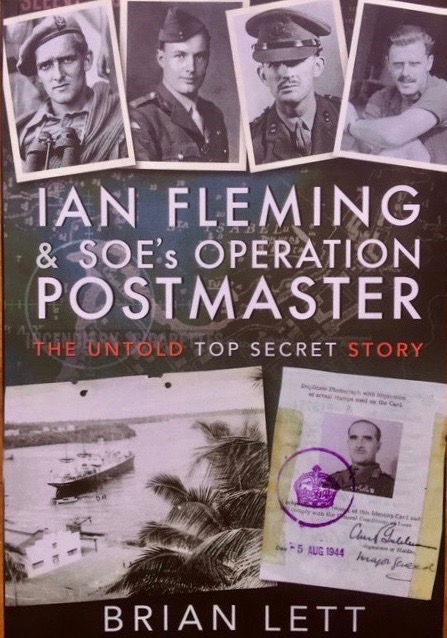
The story they presented was that they were a neutral Swedish crew on a neutral Swedish yacht. In fact, they were a group of SOE agents on an incredibly daring mission, commanded by an actual "M", with whom Ian Fleming worked. This is a book that especially Nordic SOE, SAS & Fleming/Bond buffs can appreciate.

While the Swedish flag was mere camouflage, there were actually Danes aboard, one of whom later would join the SAS and earn a VC, Anders Lassen. Thus it should already be apparent that Ian Fleming & SOE´s Operation Postmaster by Brian Lett is of special interest to Danish military history buffs. Norwegian WWII buffs also have several reasons to pick up this book, because Brigadier Colin Gubbins was "M" and he had a great deal to do with Norway from 1940.

Well, what kind of special operation is Ian Fleming & SOE´s Operation Postmaster about? In 1941 the British started receiving reports that German submarines were using rivers in French parts of Africa for refuelling. At the time, the Special Operations Executive (SOE) was a new outfit with many enemies, not just among the enemy. The SOE had to prove its worth. The cunning plan was to sail a "Swedish" SOE ship, with some great characters, to West Africa and locate German submarine bases. But having arrived in the area the main aim became to steal enemy ships from a neutral Spanish port on the volcanic island of Fernando Po. I will here not give away the wonderful story of what happened but just say that the British Government lied in order to conceal British responsibility for the operation, and basically recommend that you read this book yourself.

Being the author that I am, I do not think that the characterization of Sweden as "pro-German" in Lett´s book is fair. Regardless if one means the Swedish state or the majority of the Swedish people, the largest Swedish sympathies were about Finland, Norway and Denmark. Yes, there were Swedish Nazis and pro-German sympathies, but they never dominated. The thousands of Swedish citizens in Finnish, US and Norwegian service can be compared with the 200 in various German units. For more about Sweden during WWII please turn to e.g. John Gilmour or yours truly.

Nevertheless, Brian Lett´s book is an inspiring and exciting book that should please not just SOE and Fleming/Bond buffs. First published in 2012, the edition I got is from last year. Brian Lett has written other books about special ops and I just recently became aware of his SOE`s Mastermind - Sir Colin Gubbins, a book that I very much look forward to reading.

Thursday, January 30, 2020

Keystone of 22 SAS

Without him there would today probably be no 22nd Special Air Service Regiment.

Quite a few readers of this blog may have read several books about the WWII Special Air Service and also the SAS during recent years. But what about the first postwar decades of the SAS? Here is a book that both covers WWII experiences and some of the more interesting post-1945 SAS episodes until the 1970s. And, of course, there are some Nordic connections.

As some readers may have noticed, I have a special interest in SAS history. This should become more apparent here, as I am planning to blog more about the SAS. Keystone of 22 SAS is, simply put, a fine account both of the life, mostly in the SAS, and times of Lieutenant Colonel John Woodhouse MBE MC. He first experienced combat in a conventional British Army unit in North Africa and there, strangely enough, is the first Nordic connection in the book. For more than twenty years I have been hiking on Arctic WWII battlefields and the type of tin cans that I have most often encountered in German positions are cans that once contained Norwegian fish. Therefore I can recall images from my memory when the book´s author, Alan Hoe (himself an SAS veteran), writes about Woodhouse often eating captured (from the Germans) Norwegian sardines in North Africa.

Keystone of 22 SAS quite often contains Woodhouse´s own words and here are some sentences from his diary in 1944 to give you an idea of his wartime reflections:

"The German soldiers had an unshakable belief in their superiority over all other nations and armies. They had been led to believe that war was glorious and Hitler [...] was invincible. The Wehrmacht was very well led, better equipped and by 1943 more battle experienced than we were. [...] I was often fearful but it always mattered greatly to me that I should be well regarded and respected by the soldiers I commanded. This helped in overcoming fear."

It was in the ruins of the Third Reich that Woodhouse entered a door that eventually led to the SAS. By exaggerating his contacts with Soviet soldiers while he was a PoW, he managed to get a place in a Russian language course. On the successful completion of the course he was posted to Germany where he joined the Control Commission to act as interpreter between Soviet and British military groups. A short time later he was switched to army intelligence. He then exeperienced some memorable encounters both with Soviets, including an early defector, and Germans like Hanna Reitsch, "[...] the only German I met who had the courage still to proclaim loyalty to the Nazis".

In 1950 he reacted positively to an invitation to join the Malayan Scouts and thus fight in the deep jungles of Malaya. He volunteered not least because he was keen to serve under the legendary Mike Calvert, famous for having commanded a Chindit Brigade in Burma. Woodhouse sensed that Calvert was a great source of "original ideas and concepts". Woodhouse became both nervous and "a bit resentful" when Calvert made him Unit Intelligence Officer. But then he meets a very unlikely character in the jungle, "Yorkie" Bjorkman:

"With a good intelligence network the battle is half won. Yes. You can learn a lot from Yorkie. He´s a man with personality, guts and imagination. He´s got thirty Malay police there and he controls the jungle for miles around - controls the jungle."

Bjorkman was awarded both a Distinguished Conduct Medal, the oldest British award for gallantry, and a Military Medal, for bravery. The encounter in the jungle with a man obviously of Nordic extraction is only one of many surprises in Keystone of 22 SAS. The SAS in Cold War Denmark is also part of the book, but one wishes there had been more details in that part.

Woodhouse´s fascinating career did not end at all with his formal retirement in 1964. The year after he was asked by SAS founder David Stirling to lead a team of three men to Yemen and in cooperation with Royalist forces attack an Egyptian airfield. These experiences alone could be made into a good movie.

John Woodhouse passed away in 2008. Now it is time for you to read about his rich life in Keystone of 22 SAS.

Tuesday, January 07, 2020

The Year´s Best Military History

Seeing Field Marshal Montgomery´s "Giant Killer" was one highlight during 2019.

Several personal highlights in 2019 were connected to my first book release in London. But it was not in that city I found last year´s most impressive military history book.

Karl-Gunnar Norén and yours truly had a splendid time releasing The Long Range Desert Group: History & Legacy at the Swedish Embassy in London. Few experiences can beat meeting a cheerful LRDG & SAS veteran and the editor-in-chief of After the Battle. However, the day after was almost equally brilliant, as we then were given a surprise we had never even dreamt of: we were shown the ultimate collection of original Special Air Service (SAS) artifacts. We have still not fully recovered from this and I will return to our surprise visit in a special blog post. The above photograph is not from the SAS museum but from the desert section of the Imperial War Museum - that we visited later that day. The fly swatter actually bears the name "Giant Killer" and was used by Monty himself, in the desert - where also the Rommel portrait once was. More precisely, the portrait adorned Field Marshal Erwin Rommel´s own HQ until it was captured by the British Eighth Army.

Since those London days in May 2019 we have had the pleasure of reading about our LRDG book in After the Battle No. 186 and Classic Military Vehicle No. 219. By the way, my two English language articles about WWII in the Arctic are still in print, in After the Battle issues 99 and 136.

Summer in 2019 again meant history hiking with good friends in Narvik, and in October I had the privilege to break the news of the first film footage of a Junkers Ju 52 in pretty good shape at a depth of 75 metres, in a lake north of Narvik. Then three friends and yours truly located another Junkers aircraft, but this time a rather rare bomber, a Ju 86/B 3, and one not seen by anyone since it went down in 1943. This time the location was not in Norway but in Sweden and this is a discovery that is still not complete as we have yet to photograph and film the cockpit and tail section. So far we have basically recorded only the wings and brought up an aircraft tire and Junkers factory data plate, to clearly prove the aircraft identity. The bomber broke into sections upon crash landing on the lake ice, and the parts are very hard indeed to locate due to the nature of the lake. More info about the Ju 86/B 3 discovery will sooner or later appear on this blog.

Finally, in November, I came across the military history book that for me was the most original and important one last year, Red Assault: Soviet Airborne Forces 1939-1941 by Vladimir Kotelnikov. May the year 2020 provide less events that will go down in military history and more books as amazing as his.

Many thanks to all friends around the globe who made my three 2019 books possible.

Tuesday, August 13, 2019

Building SAS & LRDG Jeeps

64 large format pages of Jeep history by car designer and restorer Lance Cole.

Many books have been made about the first, now iconic, Second World War Jeeps. So why one more? Well, this is a Jeep book with a difference, being specially focused on modelmakers and military vehicle restorers - and not least those with a special interest for SAS and LRDG Jeeps.

Being a co-author of The Long Range Desert Group: History & Legacy my interest in LRDG & SAS Jeeps is pretty strong. I was therefore pleasantly surprised to see a SAS European Theatre of Operations Jeep as the main illustration on the cover of the new Pen & Sword Land Craft series book The Jeep by car designer, author, journalist, restorer etc Lance Cole. The scale model focus of the series (like in the Tank Craft series) is apparent from the SAS Jeep on the cover, as it is a model. But photographs of actual vehicles and color line drawings are also very much part of the book. I would say that even if you are not at all into models and rather describe yourself as a restorer and/or reenactor, you will find this book to be both helpful and simply a pleasant read and good source.

Basically, this book contains the essential development and design history, describes the lovely details of wartime Jeeps, many variants and, of course, the services they provided on various WWII battlefields. Lance Cole delivers both excellent text and many photographs of actual Jeeps and model Jeeps. Modern military vehicle designers would do well by studying the small, very clever touches of the original Jeeps.

The scale models of SAS Jeeps are well covered, both the Jeeps used in North Africa and in the ETO. The book has only one wartime SAS Jeep photo - the most classic one there is. But the many excellent colour photos of SAS Jeep models made me forgive that. The LRDG part is just one page of line drawings, but on the other hand the four page SAS in North Africa showcase features two wonderful LRDG figures that have replaced the original Tamiya SAS figures. The book informs exactly where these figures are from, and describes and shows just about every 1:24, 1:35, 1:72 and 1:76 scale Jeep kit ever made by various manufacturers around the world. The mostly stunning photos show lots of details, scale model modifications (improvements) and in some cases the models have figures and diorama bases.

Not every aspect of this vast subject is covered in the 64 pages and one hopes that Lance Cole might one day produce a second volume with e.g. Red Army Jeeps, captured Jeeps, unpublished wartime photos of SAS & LRDG Jeeps etc. But, let me be clear, this first Land Craft series book is both a very useful and beautiful guide for Jeep lovers and especially those into scale models of this superb little green machine.

Monday, June 03, 2019

LRDG & SAS Veteran Still Knows How To Win

LRDG & SAS veteran Jack Mann with the authors at the book launch in London.

There are Long Range Desert Group (LRDG) enthusiasts all over the world, but only a handful have driven in the tracks of the LRDG in WWII Jeeps to find what remains of the legendary unit in modern Egypt. Having taken part in the "2,300-mile Sahara epic", my friend Karl-Gunnar Norén decided to write a book with LRDG history highlights, original LRDG training notes and his own Jeep experiences.

Karl-Gunnar had been to several deserts, not least in Libya, but to experience something of the original environment and challenges of the LRDG he needed to find fellow enthusiasts. This he did by joining the LRDG research expedition of Toby Savage, that consisted of two 1943 made Jeeps and a team of true LRDG enthusiasts from the UK and US supported by Egyptian travel & security professionals. One of the results is the wonderful photograph on the front cover of our book, taken by John Carroll. That´s Karl-Gunnar behind the LRDG Ford. To his own desert experiences he added LRDG training notes and photographs from the archive of LRDG founder Ralph Bagnold within the Churchill Archives Centre in Cambridge.

By inviting me to join his LRDG book project, Karl-Gunnar could add one more ingredient to the historic chapters, the story of William "Swede" Anderson of the LRDG G Patrol. I had the good fortune to be introduced to "Swede" in 1988 by the always helpful LRDG Association Secretary James D. Patch (whom I probably found thanks to the journal After the Battle - at any rate that journal´s LRDG issue played a key part in this whole project). I wrote to Bill "Swede" Anderson and received several letters in reply. Some he wrote himself, some his wife Pat wrote for him due to his health.

William "Swede" Anderson of the LRDG. Photo via Peter Anderson & David Hall.

In the 1980s I was not able to realize my dream to travel to North Africa in a Jeep and then write a book about the LRDG. But the mail from Bill Anderson did have a profound effect on me. While he had never been a Swedish citizen and was actually of Swedish-Norwegian descent, the fact that he had been known as "Swede" within the LRDG inspired me to find out how many Swedes (mainly Swedish citizens) served in various armies during WWII, a search that has so far resulted in several books in Swedish and one in English (Swedes at War with Lennart Westberg).

And in the end, thanks to Karl-Gunnar and two publishers, Lind & Co in Sweden and Helion & Company in England, my now rather old book idea has finally been realized. With some help from e.g. Jack Valenti of the LRDG Preservation Society and the family of William Anderson, some more photographs could be added to the English edition of our book, that we were able to release at the Swedish Embassy in London on May 24. We were delighted that several relatives of Bill Anderson could attend together with a very much alive LRDG and SAS veteran, Jack Mann. The best operators are not only warriors but can also talk their way out of prison. Which is exactly what Jack Mann did. You can read about Jack in the brilliant Churchill´s Secret Warriors by Damien Lewis, but meeting him in person is of course extraordinary. After just a few words from him, some in very good Swedish, it became clear why Jack Mann is still a winner. His willpower and charm are intact.

We also revisited our Egyptian "star", the LRDG Chevrolet at IWM London.

A close relative of LRDG founder Ralph Bagnold was also present, and we will never ever forget the special gift we received from you sir! We were also pleasantly surprised that a man who has long inspired us could attend the book launch, After the Battle Editor-in-Chief Winston G. Ramsey. We are also indebted to Peter Jörgensen, Colonel Per Jenvald, Nigel Hirst, John Gilmour and Mikael Norman. We hereby thank all who attended the launch and look forward to meeting you again in London, Stockholm, Cairo or up here in Swedish Lapland.

Finally, a huge thank you to all the staff at our UK publisher, Helion & Company.

NON VI SED ARTE

Saturday, February 16, 2019

Modern Italian View of El Alamein

M13/40 at El Alamein. Photo: No 1 Army Film & Photographic Unit, Windows (Sgt)

You have seen the classic Long Range Desert Group (LRDG) movie "Sea of Sand" as well as "Ice Cold in Alex" (both from 1958!) and are looking for some other good movies about WWII in the desert? Well, recently I saw an Italian film about El Alamein that really made an impression on me.

There have been more movies made about the war in North Africa than most can imagine, both British, US, Italian and French films. In 2008 even a Czech & Slovak production was released, "Tobruk", about two Czechoslovak soldiers fighting in Tobruk. I have not yet been able to get hold of the latter, but here follows a short review of the probably latest Italian movie, marketed as either just "el-Alamein" or "El Alamein - The Line of Fire" (In Italian: "El Alamein - La linea del fuoco"). It is a 2002 film written and directed by Enzo Monteleone that lets the viewer see the Second battle of El Alamein from an Italian perspective. This alone is refreshing, as most war movies shown here in Scandinavia have an American or British perspective. But aside from that it is quite simply a good movie - not the best war movie I have ever seen, but certainly among the ten best.

"el-Alamein" does not really focus on one soldier, although Private Serra (Paolo Briguglia), an enthusiastic student who has volunteered, holds the film together. I would say that this film is unusually good at portraying a unit, in this case a platoon in the Italian 28th Infantry Regiment. The film brings home the alien atmosphere of the desert and how the Italians adapt to it. While I am no expert at Italian uniforms, small arms and vehicles I believe the film makers have gone to unusually great lengths to give it an authentic and gritty look. In some scenes they have been forced to use modern APCs as tanks - but they have done this in a very clever way, making it difficult to recognize their true shape. Generally speaking, almost every scene in this film has an amazingly authentic look and the desert itself is filmed with great talent.

There are few scenes with German and British troops, but that is quite all right, because after a short while you really want to find out what will happen to the Italian characters.

Now, if only some film director could realize how much movie audiences need a colour movie about the LRDG. Then, if that director could find the people behind the amazing look of "el-Alamein"...

Friday, January 05, 2018

From Geopolitics To The Ghost Patrol

Eurasianism as depicted on the cover of "The Foundations of Geopolitics".

In 2017 the world´s attention was on several occasions focused on the Korean Peninsula and many feared some kind of war there. But there was no new major violence in 2017. Instead, the ISIS/Daesh terror cult experienced major losses. Will we be so fortunate in 2018? This is my quick review of 2017 - from global to personal - plus some words about 2018.

As I write this blog post there are ominous signals coming from Asia. Sadly, there are more hotspots there than the Korean Peninsula. This does not mean there has to be a new Asian war in 2018, there have been several really bad signs before and no war. Still, the risk for a new war in Asia is IMHO more tangible than, say, five years ago. One might also say that there is an ongoing, slow, war taking place inside North Korea, the persecution of a very large number of North Korean citizens.

In Europe, the year 2017 meant no major change to the Kremlin´s unfinished war against Ukraine - meaning e.g. that, again, more people were killed there by anti-vehicle mines than in any other place, according to this SIPRI report. So far, there is no strong indication where the war is going, but the coming presidential election in Russia, with the first round on 18 March, might provide such an indication. Regarding the presidential candidates aside from Vladimir Putin, Alexei Navalny is not allowed to run and the two major contenders are right now thus Vladimir Zhirinovsky and Pavel Grudinin. Zhirinovsky has threatened the Baltic states and claimed that many in Finland desire that their country again be part of Russia. I heard the latter from the man himself, as I have interviewed him face to face. Nevertheless, Mr. Zhirinovsky, who also happens to be a Russian Army colonel, has been decorated several times by both Presidents Putin and Medvedev.

Finally, in 2017, a book appeared in Swedish about the ideology that since about 1997 has been the rising star among the Moscow security elite, Eurasianism. Like the 2016 English book Black Wind, White Snow by Charles Clover, the new Swedish book, Vi och dom by Bengt Jangfeldt, provides a highly readable history of Eurasianism. It describes, for instance, how one of the 20th century founders of this ideology, Prince Nikolai Trubetzkoy, in the end renounced his Eurasianism. Strangely, this did not stop the resurgence of the Eurasian movement in conjunction with the fall of the Soviet Union, and the first new Eurasian handbook, The Foundations of Geopolitics, has had, to quote Bengt Jangfeldt: "[...] more significance for the ideological development in Russia than any other political publication published after the fall of the Soviet Union".

Considering what is said in The Foundations of Geopolitics (written with the explicit support of a Russian general) about Finland and the Finnish-Swedish border in the section "The Finnish Question", Eurasianism is an ideology that should have been discussed here many years ago. Yet it is only now that this discussion is perhaps emerging.

Now, moving to the personal level, some highlights from my 2017. Aside from several smaller articles I was able to conduct the necessary research in Stockholm for two large articles about the discoveries in 1987 and 1988 of Eastern Bloc explosives and weapons beside one of the largest fuel depots in the country and not far from the main Swedish airport of Arlanda. The articles are based on several different Swedish, German, Austrian, Ukrainian, Russian and British sources, not least documents from the East German Stasi, proving e.g. that the terrorist group that had planted the weapons cache by Arlanda had not only received financing and shelter from the Stasi but also training from its special forces group AGM/S. In the course of my investigation in the field, supported by a good friend, I was able to visit the location of the Arlanda weapons cache and take a series of then-and-now photos and establish the distance between the forest cache and the airport, five kilometres.

Speaking of special forces, I had the pleasure of working together with Finnish military historian Mika Kulju, to also establish on the actual spot, the physical evidence from an Allied base on Swedish soil 1944-45 used for intelligence work against the German forces passing on the other side of the border, in Finnish Lapland. The first physical evidence from this base I was given about a year ago, by Gunnar Isberg, who took part in founding the very first Allied base in Sweden, "Kari", in 1943. It was a pair of US Army snow goggles that since a few weeks are preserved by the Norrbotten Museum in Luleå. These goggles were used by the SOE-trained Norwegian soldiers that lived in the Allied "Sepals" bases on Swedish soil 1944-45.

What Mika Kulju and I found was pretty amazing and forms part of Mika´s latest book, Käsivarren sota - the cover is here below. You will have to wait a year or so until I can write my book relating our findings.


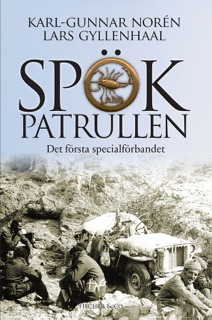
Finally, 2017 was also the year when I finished working on the translation of Spökpatrullen, meaning "The Ghost Patrol", that was published in Swedish in 2012 and written by Karl-Gunnar Norén and yours truly. The book both tells the story of the WWII Long Range Desert Group and what it takes to today find remains of their special vehicles and equipment, still out there in the Egyptian desert. Of course, Karl-Gunnar got to these very remote locations by driving an original 1943 jeep. While nothing can yet be said about its publication I can recommend you to right now open Spotify and type: Long Range Desert Group. It was my greatest pleasure in 2017 to be part of the team behind this song, led by the Swedish musician and artist Tore Berger.

Tuesday, October 25, 2016

Catastrophic Love

An unexpected and very moving love story. From Sweden to South Africa and back.

If you are reading this you probably know that my research, as well as this blog, is focused on conflicts. Well, lately I have become more interested in southern Africa - due to the armed conflicts there during the classic Cold War years, that involved also South African, US, Soviet and Cuban weapons & forces.

I am now going to write a bit about a South Africa book that you may be surprised to find here. It is an autobiography by a Swedish missionary, Eivor Jele. In 1963 Mrs. Jele left Sweden for South Africa. She was prepared for a lot but not to fully confront the apartheid system - nor to fall in love with a local man. This is the thing with her book, in spite of having read about the apartheid system since my school days, it was only this book that truly made me realize a number of things about the nature of the system. Aside from that, this book is a strong love story that starts with a "catastrophe". Mrs. Jele is a talented writer, and one feels both her love pains and smiles.

I cordially recommend this book to all Swedish-speakers with an interest in Africa. The title of the book would in translation be (Im)possible. It is so far only available in Swedish, as (O)möjligt. It is available through any Swedish library.

Tuesday, July 19, 2016

The Mercenary Behind Alexander Skarsgård: The Real Tarzan Story

The man who found Tarzan, Swedish soldier of fortune Ivor Thord-Gray, and the latest person to portray Tarzan, Swedish actor Alexander Skarsgård. PHOTOS: Umeå University Research Library & Nick Step

All reviewers of the most recent Tarzan movie have so far missed a most ironic (even spooky - compare the faces above) aspect of a Swede portraying the "lord of the jungle": the origin of the Tarzan legend can be traced to a Swedish mercenary in Africa. I have researched his long and stunning career.

Alexander Skarsgård´s face is now on several magazine covers here in Sweden and many other countries too - because of his latest film role, depicting one of the oldest and most iconic action characters ever. I too have now been to the cinema and have seen "The Legend of Tarzan". This latest version of the story mostly takes place after he has spent several years in England, but it also looks back at the crucial childhood moments of John Clayton, the baby boy that after some rather rough ape training turned into the legendary Tarzan. However, nowhere in the movie or on the internet have I found anything to suggest that any film maker, critic or Skarsgård himself is aware of the Swedish origin of the Tarzan story. True, very little has been written in English about this in recent years. But if one can understand Swedish there is a book focused on this aspect, the translated title being The Man Who Found Tarzan (so far only available in Swedish, Mannen som hittade Tarzan) by Joakim Langer.

Well, who found Tarzan, or more correctly, who gave Edgar Rice Burroughs the story that he in 1912 transformed into Tarzan of the Apes? There is much that points at a man from Stockholm, Thord Ivar Hallström. His life might seem just too incredible to be true, especially coming from such a peaceful country as Sweden. But there are many thousand documents, including good photographs, in several official archives in Sweden, Britain and the United States plus private archives in several countries - all proving that Hallström, who after entering British military service in Africa became Ivor Thord-Gray, is Sweden´s most experienced soldier of fortune ever. He served under no less than 13 different flags and fought not only in Europe and Africa but also in Asia and Latin America. In Mexico, 1914, in Pancho Villa’s service, he was in charge of the artillery. During the Russian Civil War (1917-1922) he was highly decorated and rose to the rank of a Russian general in Siberia. In 1935, he was again promoted to the rank of general, this time in the United States. Fighting in hot or freezing places was not his only talent, though. Before he died he managed to conduct enough research to become a respected ethnologist and linguist. You will find more details about Thord-Gray´s military career in Swedes at War 1914-1945 by yours truly and Lennart Westberg.

The above photograph of Thord-Gray is one of several I found in his under-researched archive within the University of Umeå. It depicts him as a cavalry volunteer on the British side in South Africa. It was during these years that he took part in the capture of a human, a boy, who had been living with some baboons. Joakim Langer has found the first traces of this account in Cape Town. It was in the Mount Nelson Hotel that Thord-Gray in September 1906, thus soon 110 years ago, told a local journalist about a boy raised by apes. That interview was later quoted by American journalists. The similarities between Thord-Gray´s account in 1906 and the 1912 tale of Tarzan by Edgar Rice Burroughs are in themselves telling. But one can also, as Joakim Langer has done, look closer at Tarzan´s noble name. Aside from being born as John Clayton he is also Lord Greystoke. In the early 20th century Thord-Gray spellt his name Thord-Grey. Lord Greystoke and Thord-Grey...

The 1906 interview with Thord-Gray about a boy raised by apes seems not yet to have appeared on the net. However, search engines can locate, in old US newspapers, this article that appeared in print the first time in May 1934:

BOY KIDNAPED [sic] BY BABOONS; TURNS TARZAN
The story of a famous fiction character, who was raised from babyhood by a tribe of apes, is entirely plausible, says Major General Ivor Thord-Gray, soldier of fortune who recently received the most valued decoration of the Swedish Government. Thord-Gray, who has campaigned and explored in a dozen countries and holds numerous decorations, related the story of a sickly eight-year-old white boy, who was seized by baboons while he was serving in the British Army at Pondoland, South Africa. The boy was being wheeled about in a perambulator by a native girl when several score of baboons swooped down upon a nearby field, where corn was ripening. The girl became frightened and fled. Soldiers drove off the animals and found the perambulator empty. The body of a young baboon lay alongside the carriage. "Well, it was not until four years later," he said, "that we got any inkling of his whereabouts." "About a day's march from camp," he said, "a sergeant came running up and told us he had discovered a hairless baboon. We followed him to the base of a. cliff and there before us was the body of a big, husky boy. his skull cracked and bleeding "The scouting party had found him among a family of baboons. The beasts, seeing the approach of the party, tried to scamper up the cliff. Most of them escaped but the boy, not as agile as the beasts, slipped and fell to the bottom. "The boy was more ferocious than the baboons. He jabbered in their language and was as wild as any ape."


Considering Ivor Thord-Gray´s words and that Tarzan now also is portrayed by a countryman of Thord-Gray, one might say that in 2016 Tarzan of the Apes earned a new title: Tarzan of the Swedes.

P.S.
What I thought about the new movie? Beautiful and pretty good entertainment, but the ending is kind of...

Monday, March 21, 2016

First Star Wars Scenes Ever Were Filmed 40 Years Ago


The Star Wars Lars´ homestead interior is now also being restored by Tunisian fans.

on March 22, 1976 the actual filming for the first ever "Star Wars" movie began, in the Tunisian desert. In moviemaking language: principal photography started. As a fan mostly of the first movie, later known as Episode IV, I will of course be watching the first recorded scenes again, exactly 40 years since they were filmed. The filming happened to start at Luke Skywalker´s home, the Lars´ homestead.

Yes, the same set that a group of fans restored in 2012 and that I blogged about then. Since that project was realized a group of Tunisian fans decided to also restore the interior of the homestead, located inside the Sidi Driss Hotel in Matmata, Tunisia (do not miss the above clip made by the fans themselves).

From the book The Making of Star Wars by J.W. Rinzler one can learn about day 1 that the first scenes to be filmed included Mark Hamill as Luke, Anthony Daniels as C-3PO, Kenny Baker in the R2-D2 shell, Phil Brown as Owen Lars (uncle Owen) and twelve Tunisians, local children, as Jawas. "I got very badly cut up" Daniels remembers about day 1, and for more memories from it you really should ge Rinzler´s great (also in size) book.

As I am writing these words I feel a great urge to go back to my roots, my early motives. Because, silly as it may sound, that first Star Wars movie affected my thinking about life in several ways. Had the good fortune to be able to see it when it came out here in Sweden in late 1977.

Right now, Episode VIII is being filmed and if you are wondering how I feel about it, well - I am not that strongly interested. Certainly, I will go see it with my family. But there is no true passion in my interest - as Episode VII in my opinion was only a small improvement compared to the previous three movies (i.e. Episodes I-III). Sure, Ep. VII has some terrific scenes and as a Swede it was pretty fun to note that it opened with a Swedish actor, Max von Sydow, and ended with a Swedish American, Mark Hamill. But, all in all, I can´t help thinking of how the immense resources available to the moviemakers could have been used with a better script, one with better dialogue. Princess Leia had such wonderful lines in Ep I-III and sadly nothing came even close to them in Ep. VII. And it is not like there was a lack of dialogue out there that could have been used. Take for example Boba Fett in book 1 of the series The Bounty Hunter Wars: The Mandalorian Armor (1998) by K.W. Jeter. To quote Jeter/Fett: "They have their standards ... and I have mine".

Boba Fett is on to something.

P.S.
Speaking about Tunisia, soon after seeing Star Wars (Ep. IV) I discovered another theme that I still feel passionate about: WWII special forces in North Africa. As a result, I am currently translating a book about the first of them.

Friday, December 28, 2012

What Mattered In 2012

The book of the year, if you ask me.

Looking back at 2012 I would say it again was a year of the rise of Asia and in particular China. As for my own work during this year, North Africa was a major focus.

Judging from recent reports, the world in 2013 will be no less shaped by what takes place in Asia, starting January 1.

The Syrian Civil War may evolve into something much worse. Another serious hotspot is of course Iran, and, as always, there is Israel and North Korea. The latter country is the subject of this year´s strongest book IMHO, Escape From Camp 14 by Blaine Harden. But for some reason I reckon that the East China Sea holds the greatest dangers during 2013.

In case we are fortunate enough that no new major wars break out in 2013 the world may still suffer greatly, perhaps as much as from war, by further inactivity in the field of energy, i.e. by not seriously going for alternative energy sources. Here the US, China and the EU probably hold the largest keys.

Moving away from things of global importance to my own work, in 2012 I was writing mostly on a book about a special forces unit in North Africa, Ghost Patrol. It was released a month ago. I also wrote several articles about more or less recent military history, one which was extra special, as it to a great extent was the result of exciting discoveries in the mountains by some very energetic readers of mine.

Speaking about readers, I only now found this study in English about Swedish volunteers in the International Brigades during the Spanish Civil War, partly based on Swedes at War. Well, in 2013 I will return to the subject of Swedish volunteers, first those in Finland and Norway in 1940, and then, in another book, all over Europe and Asia.

Goodbye 2012 and wishing all my readers a Happy New Year!

UPDATE DEC 30:
When I wrote the above I was not aware of this article re. the worsening security climate China-Japan.

P.S.
But, you may ask, what about a Swedish connection to Escape From Camp 14? Well, although the book makes no reference to Sweden or any other Nordic country, Sweden played a largely unknown role during the first combat phase of the still unfinished Korean War. There was both a Swedish field hospital where everyone wore US uniforms and in addition a handful of Swedish volunteers and many more Swedish Americans in US combat units. More about them in a coming book by me and Lennart Westberg. Although Escape From Camp 14 is not about a soldier but about a man born in a North Korean concentration camp, it does provide valuable insights also into Korean history. In addition, yours truly during four years lived right beside the North Korean embassy in Switzerland. This gave me several opportunities to learn about North Korea. I got to talk with several persons living inside the embassy, especially one Kim. It was, however, not the Kim now ruling North Korea, as he arrived in Switzerland only after I had left the country. Still, I have some idea about the wonderful environment where he spent some of his formative years. I tend to think those years must have done him and the world some kind of good.

Thursday, November 29, 2012

Ghost Patrol Release

My co-author in the front jeep´s front passenger seat. PHOTO: Toby Savage

Today the first book in Swedish about the Long Range Desert Group (LRDG) will be officially released by Fischer & Co in Stockholm. I am now very much looking forward to soon meeting and celebrating with my co-author and others who made the book possible.

Ghost Patrol, as the title translates, is also the first book about WWII in Africa that I have written, partially that is. Karl-Gunnar Norén is the main author and has lots of African experience and has already written several books about Africa. The above photo by Toby Savage was taken during his and Karl-Gunnar´s "2300-mile Sahara epic". To see more photos by Toby, visit his website.

Karl-Gunnar has done what no Swede has done before, reenacted a LRDG patrol where they actually took place, in a 1943 vintage jeep, LRDG style. The book is both about the LRDG story and what it was like for Karl-Gunnar, incidentally born also in 1943, to drive in their tracks. As for me, I have only visited the former LRDG HQ in Cairo.

Ghost Patrol is dedicated to Toby Savage and LRDG veteran Bill "Swede" Anderson. The latter is very much the reason for my interest in the unit.

Well, here we go, Karl-Gunnar!

Friday, October 26, 2012

Ghost Patrol Update

Soon printed: "Ghost Patrol" by Karl-Gunnar Norén and yours truly. The front features an original LRDG scorpion badge inside the Swedish title.

The back features a hitherto unpublished LRDG photo (more inside) and a colour photo of the 2012 LRDG tour in Egypt (more inside!).

Today I finished the rather tiresome but very important work of responding to questions from the editors of Ghost Patrol, Karl-Gunnar Norén´s and my coming book about the Long Range Desert Group (LRDG) and its legacy.

Thank you Lena and Kajsa for all your work! I am very pleased and especially that the photos of the WWII wrecks still in the desert, taken just some months ago, will be printed in colour. Thank you Mikael at Yours for the superb cover! I always want to work with you when it comes to covers. Right now I feel quite elated because all that is left now for me to do is to check the complete book just before the first edition is printed, which will happen in not that many days time.

Feeling good and thank God its Friday! (have to find that old disco song...)

P.S.
Yes, there is some interest abroad among publishers. But too early to say more.

Friday, October 08, 2010

Tarzan-Discoverer´s Mystery Division

A reader of Swedes at War in the United States, Mr. N. Faller, has enquired about a mysterious unit mentioned in our book, the volunteer division "Theodore Roosevelt". Mr. Faller is right in doubting the existence of this unit.

However, the reply is not simply that it never existed. Mr. Faller has kindly allowed me to make the full reply to his question public, as it may interest other American readers and also British and Swedish readers.

The Swede behind the recruitment drive for the British-American division "Theodore Roosevelt", Ivar Thord Hallström, who in British service became Ivor Thord-Gray. Here he is in South Africa where he discovered the real-life Tarzan. PHOTO: The Research Archives, Umeå University Library

The volunteer division "Theodore Roosevelt" is only mentioned in one sentence in Swedes at War. Still, we should have added a footnote or endnote about it because it is a pretty unknown unit, to say the least.

The division is mentioned in our book in a CV for Ivar Thord Hallström who became Ivor Thord-Gray in conjunction with becoming a British officer in South Africa. In the United States Thord-Gray got the approval of then former president Roosevelt to start up the unit. He focused on recruiting Britons or ex-Brits in the US. By the time the project was stopped, in April 1917, 3,500 men har enlisted for the division. Roosevelt personally thanked Thord-Gray in a letter dated May 25, 1917, and said it was sad the project had to be aborted due to lack of support from President Woodrow Wilson.

As part of Thord-Gray´s work for the "Theodore Roosevelt" project he produced a manual entitled Tactics on Attack and Defence in Trench Warfare. You might possibly be able to find that book via some internet bookseller.

Speaking of World War One, it is not that difficult to prove how close we still are to that war. Close? Well, now in late 2010 there are still at least three WWI veterans alive. Or four if you like: Frank Buckles (US Army 1917-1919), Claude Choules (Royal Navy 1916-1956) and Florence Green (RAF 1918-1919). In addition theres is Mr. Jozef Kowalski of the Polish Army who began his service after the WWI armistice but before the Treaty of Versailles. Here is a nice master list about these veterans if you want to research them.

Why the hard feelings between Theodore Roosevelt and Woodrow Wilson? The most recent arcticle on this subject was the superb piece "War & Diplomacy" in Armchair General July 2010.

For more on Thord-Gray, not least his role in bringing about the Tarzan icon, see Joakim Langer´s book Mannen som hittade Tarzan ("The Man Who Found Tarzan").

BTW Swedes at War was recently used as a source in this Mexican history article, as Thord-Gray was there too, fighting as a soldier of fortune.